
What Does an IP65 Rating Really Cover?
Apparatus in a damp or an exposed position is an item of electrical plant so placed that rain, spray, ground water, dust or the weather can reach it, for which an enclosure is chosen to suit the conditions of the place.
Understand What IP65 Does and Does Not Answer
The degree of protection is the degree of protection afforded by an enclosure to the parts inside it against the ingress of solid foreign bodies and/or water. The first numeral following the IP symbol is the degree of protection against the ingress of solid foreign bodies; the second numeral is the degree of protection against the ingress of water.
The proof of the degree of protection is verified by tests laid down in the standards and consists of testing for the ingress of solid foreign bodies and/or water, to prove that the apparatus meets its declared degree of protection. The standards lay down the method of making the tests; the tests are made on finished samples of the apparatus.
The publication IEC 60529 gives the degrees of protection provided by enclosures, and the meaning and the tests of each figure are set out there.IEC 60529
The Choice of the Position
For those places where apparatus is in a damp or an exposed position, the apparatus rating is arranged to suit the conditions of the place.
The contractor should aim to place all electrical apparatus in positions where the risk of mechanical damage is low and where the protection is not defeated by carelessness. He should ensure that the degree of protection chosen is suitable for the environment in which the apparatus is to operate.
The degree of protection of the enclosure should be chosen to suit the situation.
The supply in Vietnam is discussed publicly in terms of maintaining supply and safety through extreme weather; that national discussion does not decide a particular house, and the position is judged from the conditions of the place itself.the supply in Vietnam
Record the Finished Mounting and Water Path
Apparatus should be solidly fixed to the wall or other support. If the apparatus is part of a machine and is mounted on it, the vibration and other mechanical stresses should be considered; the maker should be consulted if any doubt exists.
Where apparatus is fixed to a wall, it is desirable to leave a space between it and the wall, to deter moisture from collecting at the back of the apparatus. Where practicable, the apparatus should be arranged so that it can be inspected, maintained and replaced without disturbance to the wall.
Where an enclosure is in a position exposed to the weather, the condensation inside the enclosure should be considered.
Cable Entries and Condensation
Where a cable enters an enclosure the method of entry should be such that the degree of protection is not reduced.
The cable should be supported so that the weight is not carried by the terminations.
The cable should be chosen to suit the conditions of the place.
Condensation can occur in enclosures due to temperature variations. Where apparatus is enclosed in a sealed enclosure, it is desirable to provide means for the absorption of any condensation which may occur.
Where the risk of condensation exists, the apparatus should be insulated and heated so that the temperature of the apparatus is, at all times, above the dew-point of the air in the enclosure.
Protect Service and Emergency Access
Adequate clearance should be provided for operation and maintenance.
The enclosure should be so placed that the doors can be fully opened, so that the apparatus can be inspected and maintained.
Where apparatus is fixed in a position exposed to the weather, it is desirable that it be shielded from the sun, so that the operation of the apparatus is not affected by a rise in temperature. The ventilation of the enclosure should be arranged to suit the dissipation of heat from the apparatus.
Where apparatus is situated in an exposed position it should be enclosed in a weatherproof enclosure to a degree of protection appropriate to the position.
If the enclosure is placed outside, it may be subject to various conditions, such as:
– direct sunlight
– heavy rain
– snow
– wind-blown dust
– water from the ground
– corrosion
– mechanical damage.
The degree of protection chosen must be suitable for the “worst case” condition.
Confirm the Exact Battery Before You Assess the Corner
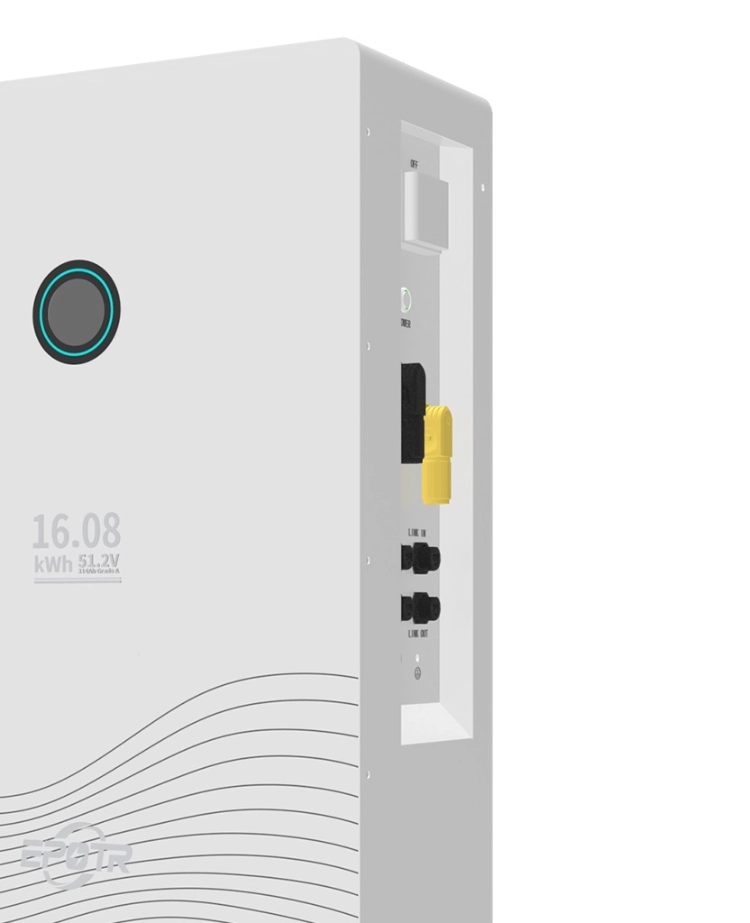
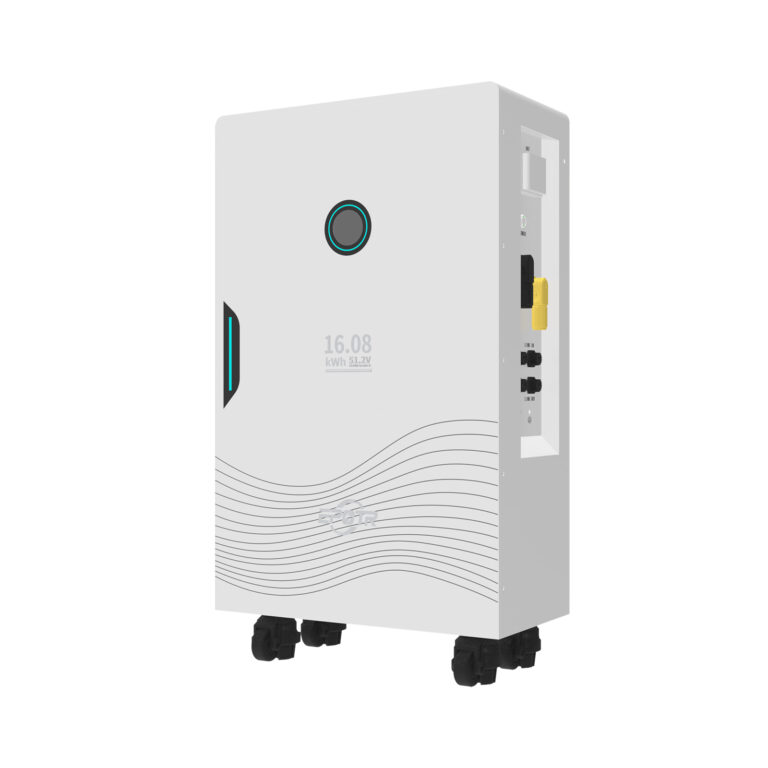
For the unit sold in the home ESS line the maker’s page gives model EP-FS016KP, 16.08 kWh nominal energy, 51.2 V nominal voltage, LiFePO4 cells, CAN and RS485 ports and an IP65 enclosure rating.maker’s page for the IP65 home battery
The unit should be placed where the ambient temperature stays within the maker’s range, and the cable entries should be made good to keep the IP65 rating.
The maker’s sheet gives the enclosure rating and the ambient conditions for the unit; where the unit is to be placed in a damp or exposed position, the enclosure rating given by the maker should be checked against the conditions of the place. If the conditions of the place are worse than the rating allows, the unit should be placed in a suitable enclosure, or in a sheltered position.
The particulars of the apparatus, as declared by the maker, should be recorded and kept with the apparatus.
Give the Owner a Small, Usable Handover Pack
The maker’s Vietnamese category page lists the product family, and the contact page carries the maker’s channel for a question about a particular site.Vietnamese category pagepage de contact
Before the apparatus is put into service, the completed work should be inspected, and the inspection should include:
– the condition of the enclosure, including the door seals and the cable entries;
– the security of the fixing to the support;
– the cleanliness of the interior, and the absence of moisture;
– the tightness of the connections;
– the condition of the cable support;
– the correctness of the rating against the conditions of the place.
A record of the inspection should be kept.
Apparatus in a damp or an exposed position should be inspected at intervals, and the intervals should be decided by the conditions of the place.
The inspection should be made with the apparatus isolated, where the work requires it. The enclosure seals and the cable entries should be checked; where a seal is damaged, it should be replaced.
The interior of the enclosure should be kept clean and dry; where moisture is found, the cause should be found and removed.
The connections should be checked for tightness; where a connection is found loose, it should be remade.
The earth connection should be checked, and the earth continuity should be verified.
A record of the maintenance should be kept with the record of the inspection.
Faults in a Handover Record
Where a defect is found, the cause should be found and removed, and the apparatus should be made good before it is put back into service.
The causes of the common defects are:
– a damaged seal, or a cable entry made good with an unsuitable material;
– a fixing which has worked loose;
– a connection which has worked loose;
– dampness in the enclosure, due to condensation or to the entry of water;
– a rating which is not suitable for the conditions of the place.
Where the fault is in the apparatus, the maker’s instructions should be followed.
The maker’s page for the model carries the data sheet and the current manual, and both belong with the papers of the work. Where a position raises a question the page cannot answer, the maker’s contact channel and the reply kept with the project revision complete the record.
FAQ (questions fréquentes)
Does an IP65 enclosure permit the battery to stand in water?
No. The figure covers protection against dust and against water jets under the tests of the standard, and not protection against immersion. A position where water may stand is therefore unsuitable.
Is a covered veranda or a carport always a suitable position?
No. Wind-driven rain, ground water, sun, heat and the clearance for service are judged for each place, and the enclosure is chosen to suit them.
Why is the state of the place recorded before the work begins?
The position is described before the apparatus is fixed, so that the conditions found at acceptance are known to have existed and are not inferred afterwards from memory.
What is written down where a cable enters the enclosure?
The entry and the means by which the protection of the enclosure was kept at the entry are described, and the description is kept with the drawing.
What is to be done if the position is changed after acceptance?
The change is written upon the description, and the enclosure figure and the clearances are checked again for the new conditions.
Conclusion
The marking upon an enclosure describes the tests of the enclosure and not the suitability of a place. Where the position is chosen for the conditions found there, and the work is described at the time it was done, the record shows later why that position was accepted and whether it has since changed.