
What the Monthly Bill Leaves Out

A record of load is a timed series of measurements of the power taken at the supply point of a building, kept together with the trading events, the circuit notes and the identity of the meter of the same period. Records may be required for one or more of the following purposes: – as an aid for designing electrical installation and checking its adequacy for load growth; – as a means of appraising the tariff for electricity applicable to the supply; – to control the maximum demand in relation to the chargeable capacity; – as evidence of the usage of energy and its pattern of change, in the context of energy management and accountability.
Choosing One Operating Objective
The design of an installation requires knowledge of the maximum demand on each circuit, and of the diversity in demand between circuits; this in turn demands the recording of current in each circuit separately, alongside the events of the period and the readings of the main meter, in order that the overall demand and the chances of growth can be judged. For tariff appraisal, the relation between maximum demand and total consumption is required, and the load factor; also the timing of the demand peak in relation to the charges for maximum demand on a time-of-day basis. For controlling the maximum demand it is useful to know which circuits are taking current at the time when the peak is approached. For energy management, the division of the total consumption between the circuits, or between groups of circuits, together with the ambient conditions of the period, is required. It follows that the more detailed are the observations of the circuits, the more uses can be made of the record; and that the events of trading at the times of readings are an essential part of the record.
Interval Data on One Clock
An interval record of load is a set of simultaneous readings of the demand on a number of circuits, separated by equal intervals of time during a period of observation. Interval records are necessary for the study of a complete installation, and convenient for any one circuit.
The intervals are to be chosen so that the readings can be taken and written down without hurry. The intervals need not be synchronous with the beginning of the hour; it is conventional, but not necessary, since the appearance of the load ‘peaks’ is not to be relied upon to an exact minute.
Walking the Panels
The clocks are to be checked at the start and the finish of each round.
Write down readings at the time of the round, without postponement of the entry (figures should be written down as they are observed, not memorised). Use one book for the purpose. Record the time at which each reading is made.
Begin with the main meter; then read all meters on one panel in turn, in a regular order kept on each occasion. Make the round the same way every time.
Do not interfere with the setting of any meter during the round.
Use a torch if the panels are in darkness. Make sure the panels are clean and the meters readable.
Circuit Groups and Refrigeration Duty
Where many circuits are to be recorded, they should be grouped in advance so that the readings can be made in a reasonable time. Each group must consist of circuits which are under a common control, or which supply apparatus of one type, or which supply apparatus which operates under a common regime. The groups are to be decided before recording begins, and written down in the record.
Circuits supplying the compressors of the refrigerating plant are to be recorded separately, so that the number of compressors in operation at each interval can be counted. The count of running compressors is evidence of the weather, and of the effect of changes in the shop upon the refrigeration duty: it assists the interpretation of the record.
Keeping the Difficult Days
The events of trading determine which days are to be kept out of the average. The record of each day is to be qualified by a note of the date, the day of the week, the hours of trading and the weather. It is the events of the day which determine the day’s record; the average of a number of days is not to be relied upon unless the days are of the same type.
A day of average daily trading need not be exactly typical of the week; but it shall be free of any event which is out of the ordinary course of trade, and shall have been observed throughout the hours of trading.
The Operating Duty Statement
In every case where the record is made for a definite object, a statement of the object is to be written down before the record begins: for example, ‘to find the maximum demand and the load factor of the installation for comparison with the tariff’ or ‘to determine the consumption of each circuit for the apportionment of energy charges’. The scope of the record, and the reason for the choice of circuits, should be given.
The record of events is to be kept by the observer, and is to include the beginning and the end of trading; the times of switching on and off of the several circuits; the times of the switching on of any load which is unexpected; the times of any interruption of the supply; the times of the rising and the setting of the sun, where these bear upon the lighting load. The record is to be annotated with any change of the regime of ventilation or heating; and with any change of the occupancy, such as the opening of a new sales area.
The Request for Quotation

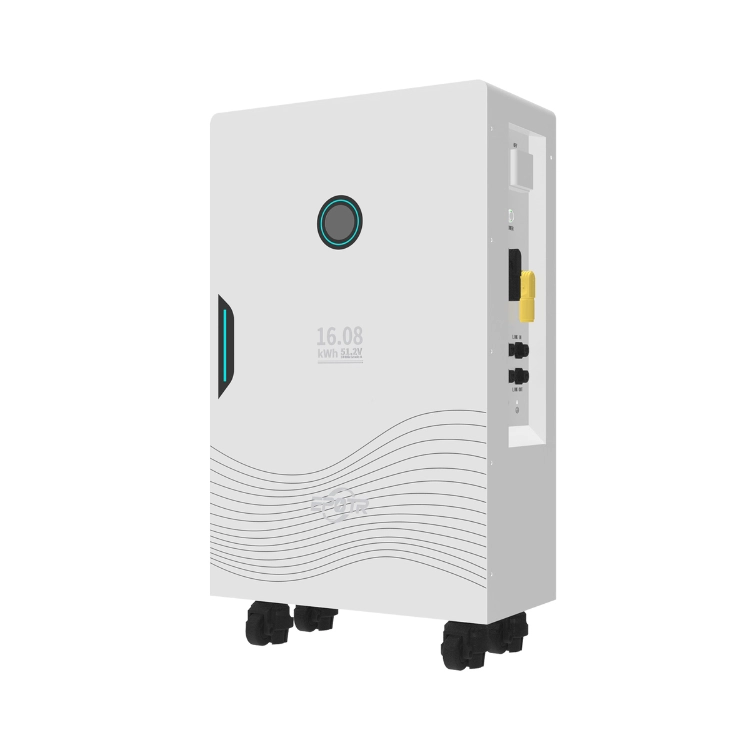
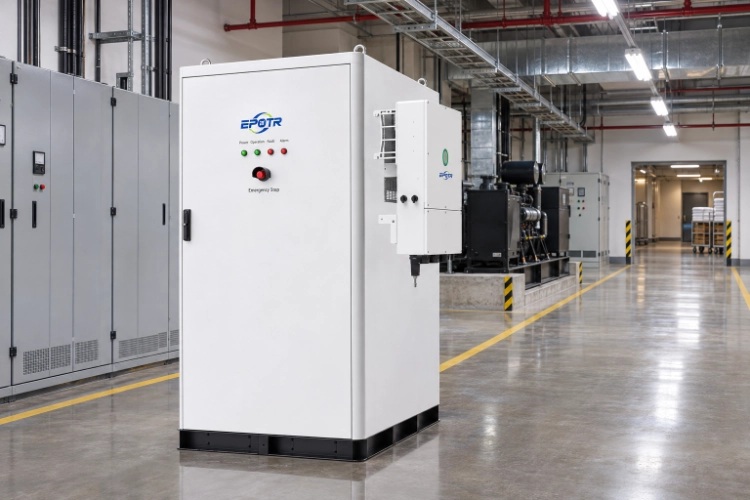
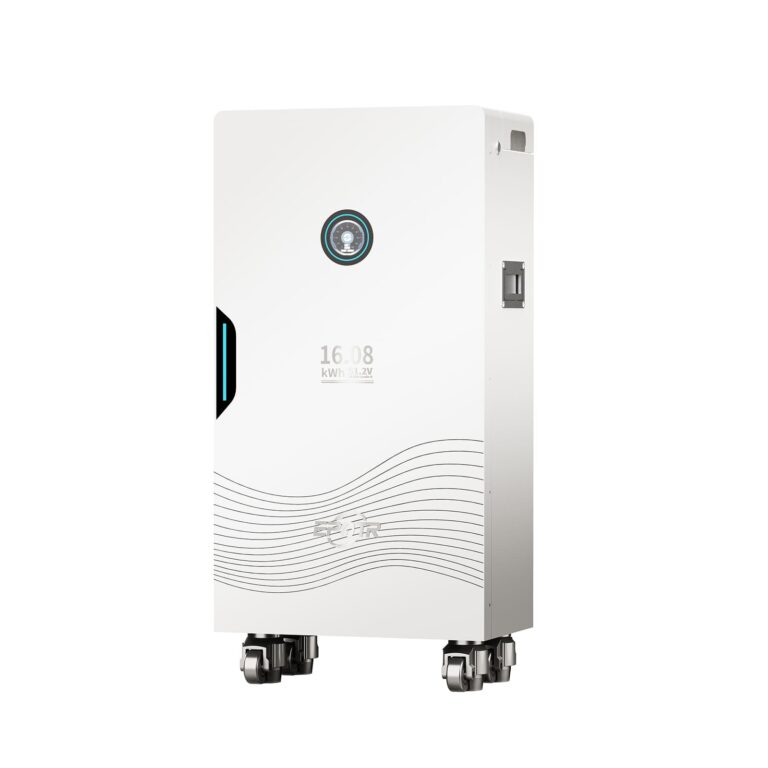
The maker’s commercial and industrial page names model EP215L-100K and gives cabinet particulars for rated AC power and system capacity; the opening sample of the record is 30 days of interval data.commercial and industrial ESS page
The Philippine Department of Energy has published an energy storage policy and energy efficiency implementing rules; how far either applies to a particular establishment is a matter for the operator and the adviser.updated energy storage policyenergy efficiency implementing rules
Errors to Look For
The operator must check the record for:
(a) a wrong time scale;
(b) a missing day;
(c) a flat top to the record (which masks a peak);
(d) a zero reading on one or more phases.
A phase can lose its supply through a blown fuse or a loose connection, and the load will be carried by the other phases. A zero reading on a phase is not always a fault of the meter.
The maker’s category page lists the product routes and the contact page carries the channel for a controlled package of site papers; the answer, with the assumptions it leaves open, belongs with the study.C&I storage categoryหน้าติดต่อของ EPOTR
คำถามที่พบบ่อย
Is 30 days always enough?
It is an opening sample rather than a fixed rule. Where the trading pattern, the weather or the refrigeration load changes with the season, the measurement window is extended to cover those states.
Can a utility bill replace interval data?
Rarely. A bill gives the energy and the charges for a period, but it does not show when each peak began, how long it lasted, or which plant was running at the time.
Should every refrigeration circuit receive backup power?
Not by default. The backed-up set is chosen from food-safety requirements, the thermal behaviour of each room, the layout of the circuits, the restart sequence and an engineering review.
Does the nameplate capacity equal the energy delivered to the loads?
No. Usable limits, the reserve held for outage duty, conversion losses, auxiliary consumption and the temperature of the room all reduce what the plant finally delivers.
What makes a storage business case reviewable?
Every measured value points to a meter, a bill, a contract or a log, and each assumption is shown as a separate line instead of being buried in one savings figure.
ข้อสรุป
A storage study for a Philippine supermarket begins with time, not with the size of the cabinet. When the interval record, the operating events, the knowledge of the circuits, a defined reserve and the inputs of the business case are laid out together, bidders quote against the same duty. That gives the engineering and finance teams a firmer footing for judging whether storage suits the store and how it should be run.