
A supermarket should normally back up the smallest load set that protects food safety, keeps essential transactions and communications alive, supports safe evacuation, and allows an orderly restart. That is rarely 100% of the store. The correct boundary is a site-specific kilowatt and kilowatt-hour requirement—not a generic percentage of floor area or connected load.
For a Malaysian project, the decision starts with interval data, circuit-level verification and an agreed outage operating plan. It ends with competent electrical design, local approvals and witnessed testing. Malaysia’s current BESS safety framework should be treated as an early design input, not a document to check after the equipment has arrived.
Back up business outcomes, not a percentage of the building
The first workshop should not ask, “How large a battery can we buy?” It should ask what the store must still accomplish 15 minutes, one hour and several hours into an outage. That conversation usually separates loads into four practical groups.
- Cold-chain protection: selected refrigeration racks, cold rooms, controls, alarms and condensate or ventilation equipment needed to prevent spoilage.
- Safe occupancy and shutdown: emergency lighting, fire and life-safety interfaces, selected lifts only where required, security, public-address and safe shutdown of sensitive equipment.
- Revenue continuity: a limited number of checkout lanes, payment and network equipment, store servers, access control and communications.
- Deferrable loads: comfort air-conditioning, decorative lighting, nonessential kitchens, signage, general sockets and other circuits that can wait for the grid or generator.
The boundary also depends on operating policy. A store that remains open needs a different backed-up distribution board from one that closes safely but protects chilled inventory. The battery energy storage system must be designed around that explicit mode.
Build a measured critical-load schedule
Nameplate totals are a poor substitute for measured demand. Refrigeration compressors cycle, defrost heaters operate in blocks, checkout loads vary with trading activity, and motors can draw much more power while starting than while running. Obtain at least representative interval data, then verify the circuits with the facility team and an electrical professional.
| Load group | Data to capture | Outage decision | Control requirement |
|---|---|---|---|
| Refrigeration | Running kW, compressor starts, duty cycle, defrost schedule | Protect selected racks and cold rooms | Stagger starts; pause noncritical defrost where permitted |
| Checkout and IT | UPS load, network dependencies, restart behavior | Keep a minimum lane count online | Transfer without losing network or payment equipment |
| Lighting and security | Emergency and task-light circuits | Retain safe, limited coverage | Separate from decorative and general lighting |
| HVAC and tenant loads | Actual demand and operating priority | Usually shed or rotate | Automated shedding with manual override |
Treat motor starting as a sequence
Do not add every compressor’s locked-rotor current and assume they start together. Equally, do not ignore starting demand. Record which controllers restart automatically, how long each start lasts, and what delay can be programmed between groups. A staged restart can reduce required inverter power without compromising product temperature.
Calculate discharge power and usable energy separately
Power determines whether the system can carry the largest credible combination of running loads and permitted starts. Energy determines how long those loads can operate. Mixing the two is a common reason a project looks adequate on a quotation but disappoints during a real outage.
Required usable energy (kWh) = Σ [load kW × required runtime × realistic duty factor] + BESS auxiliaries + operating reserve.
Required discharge power (kW) = highest credible coincident running load + approved starting or step-load allowance.
Then convert usable energy to nominal battery capacity using the permitted state-of-charge window and expected conversion losses. Temperature, ageing assumptions, auxiliary consumption and generator strategy belong in the design basis. They should not be hidden inside a single unexplained contingency percentage.
A small worked example
Consider an illustration—not a design value. If selected refrigeration averages 18 kW, checkout/network/security averages 4 kW, essential lighting averages 3 kW and controls average 1 kW, the steady critical demand is about 26 kW. Two hours at that level is 52 kWh before conversion losses, auxiliaries and reserve. If compressor starts create a larger short-duration peak, the power rating may become the binding constraint even though the energy total appears modest.
Use staged load shedding instead of an all-or-nothing panel
A supermarket’s priority changes as an outage continues. A simple three-stage sequence usually creates more value than permanently oversizing the battery for every conceivable load.
| Outage stage | Typical operating objective | Example action |
|---|---|---|
| Immediate ride-through | Prevent unsafe trips and protect data | Carry critical boards; block simultaneous motor restart |
| Controlled trading | Maintain cold chain and limited sales | Reduce checkout lanes, lighting zones and comfort HVAC |
| Extended outage | Preserve inventory and safe shutdown | Run only selected refrigeration, controls, security and communications |
This logic needs defined thresholds, not operator guesswork. Document the state-of-charge reserve, which circuits drop first, when a generator may start, and which loads require a controlled recovery. The same sequence should be visible in the controls narrative and the site acceptance test.
Match equipment to the duty—not just the brochure capacity
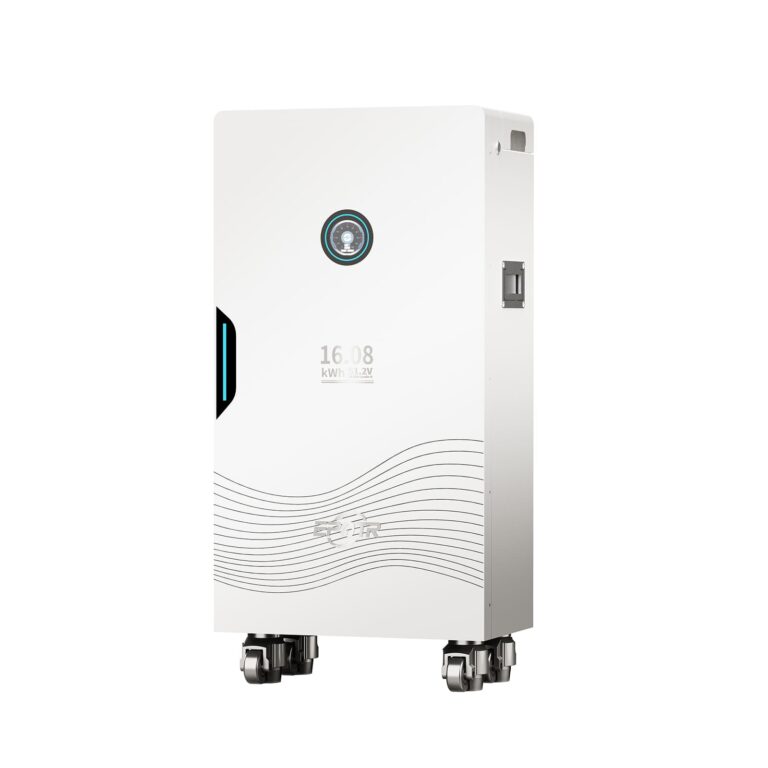
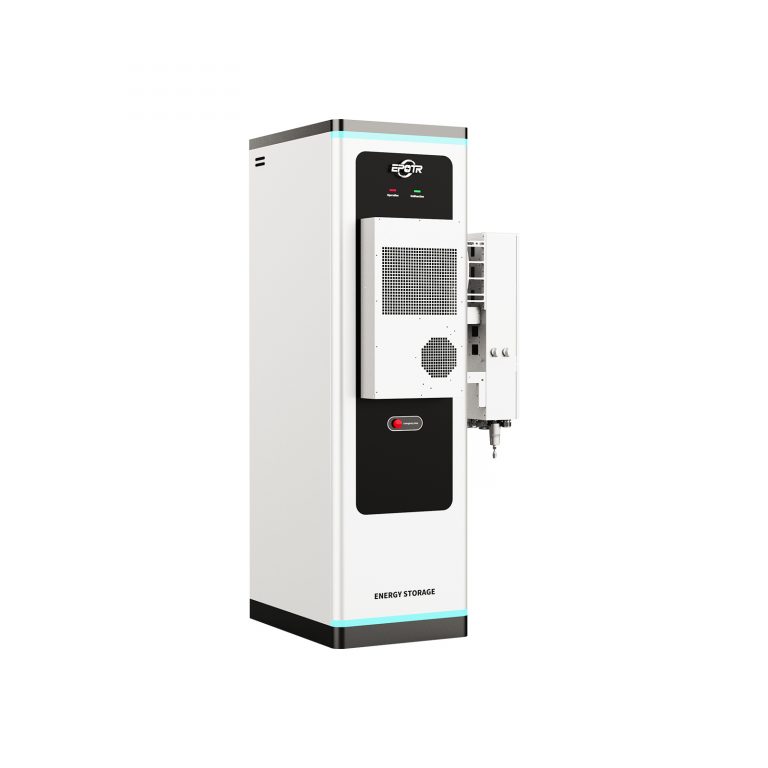
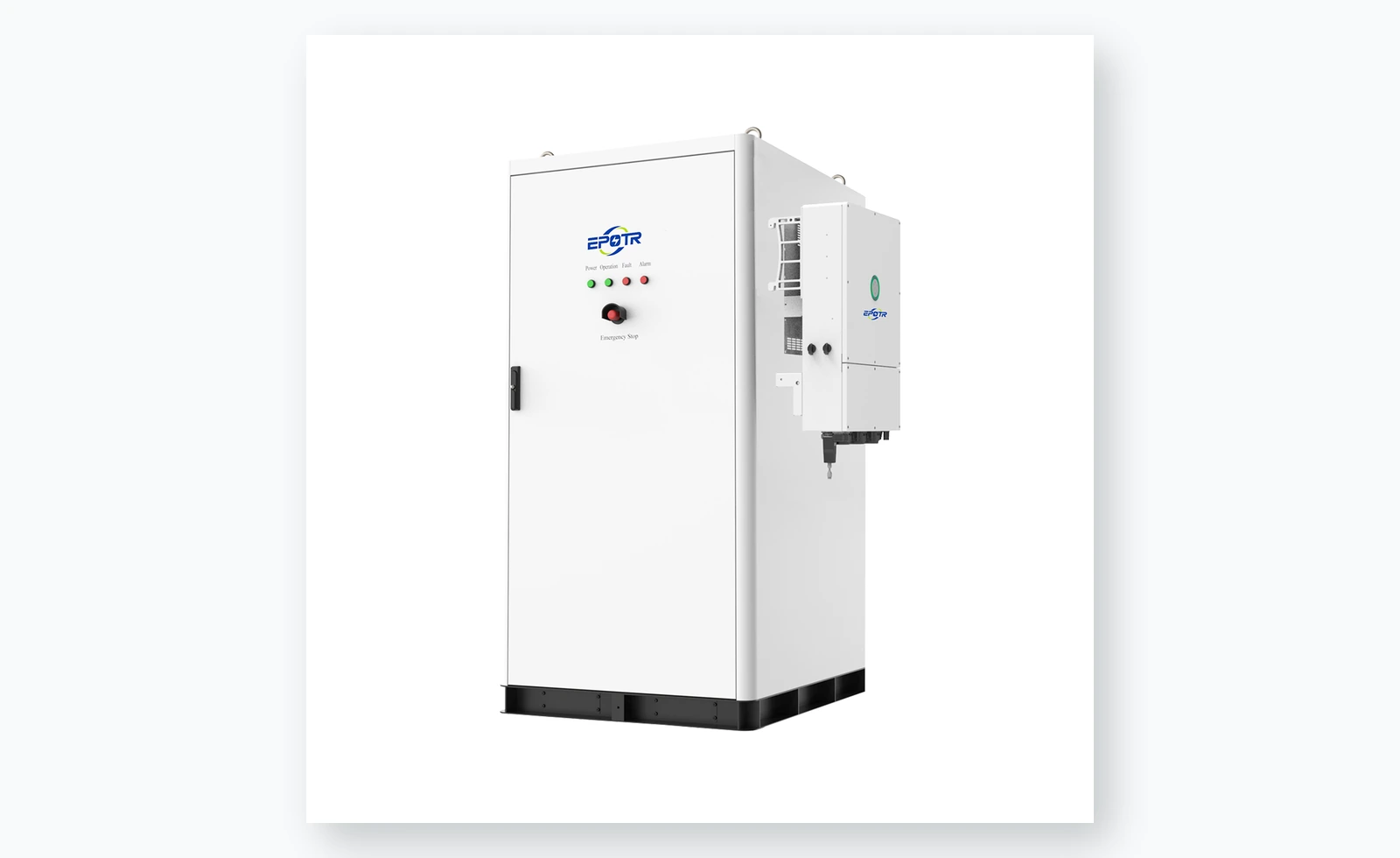
A practical shortlist should compare continuous AC power, short-duration overload capability, usable battery energy, switching behavior, communications, site environment, service access and generator interaction. The EPOTR EP1 all-in-one hybrid C&I ESS is positioned for supermarkets and integrates LiFePO4 storage, power conversion and controls in a 50 kW platform with 57.3–100.3 kWh rated-energy options. Its published specifications include 55 kVA maximum apparent power, 75 kVA for five seconds, generator connection, grid/off-grid operation and scalable parallel deployment.
Those figures help screen a concept; they do not prove fit for a particular store. Compare the measured duty with the exact model configuration, available fault level, earthing arrangement, transfer design, ambient conditions and local approval route. Larger or differently configured projects can be explored through EPOTR’s commercial and industrial energy-storage portfolio.
Resolve Malaysian safety and approval questions before procurement
Malaysia’s guidance places design, installation, operation and maintenance responsibilities with competent persons and requires relevant electrical work to be carried out through registered parties. It also brings local-authority requirements, transport, fire safety, siting, working clearances, environmental protection, technical evaluation and factory/site testing into the project scope.
For a supermarket, that means the equipment location cannot be selected only because space is available. Confirm access for maintenance and emergency response, water and dust exposure, ventilation or cooling, collision protection, cable routes, separation from the public, alarm routing and the effect of a fire event on business continuity. Product ingress-protection ratings must be checked against the actual installation—not assumed from the product family name.
Commission the operating plan, not only the hardware
A credible site acceptance test should reproduce the decisions made during sizing. At minimum, verify the following:
- Loss-of-grid detection, transfer behavior and recovery without unsafe backfeed.
- Staggered restart of refrigeration and the largest approved load step.
- Automatic shedding at each state-of-charge or runtime threshold.
- Checkout, network, alarms and communications through the complete transition.
- Generator start, synchronization or changeover logic where a generator is included.
- Alarm history, remote monitoring, emergency stop, maintenance access and operator handover.
EPOTR’s commercial energy-storage solution options can support early architecture discussions, but the final design still needs the store’s single-line diagram, load profile, outage objective and installation constraints.
Frequently asked questions
Should refrigeration always receive the highest priority?
Usually it is a leading business-continuity load, but safety systems and controls may have no permissible interruption. The priority list should reflect food-safety procedures, refrigeration thermal inertia, legal obligations and how the store will operate during the outage.
Can one battery replace both a UPS and a generator?
Sometimes functions can be consolidated, but the answer depends on transfer time, power quality, fault response, autonomy and the site’s recovery plan. Do not assume that an energy-storage inverter provides every UPS or generator function.
Is two hours of backup a safe default?
No. Two hours may be excessive for a ride-through project or inadequate where outages are long and no generator is available. Use the outage objective, measured demand and an agreed operating sequence.
What information should be sent for a preliminary review?
Provide recent interval demand, the single-line diagram, circuit-level critical-load list, motor data, target runtime, generator details, tariff and demand-charge information, site photographs, available footprint and the intended installation environment. You can request a site-specific configuration review once those inputs are assembled.
The practical sizing rule
Back up the smallest measured load set that protects safety, cold-chain value and the chosen level of trading—then validate power, energy, controls and restart behavior separately. A well-scoped battery energy storage system is often more resilient than a larger unit connected to an undefined “essential” panel, because everyone knows exactly what it will carry and how it will respond as the outage develops.