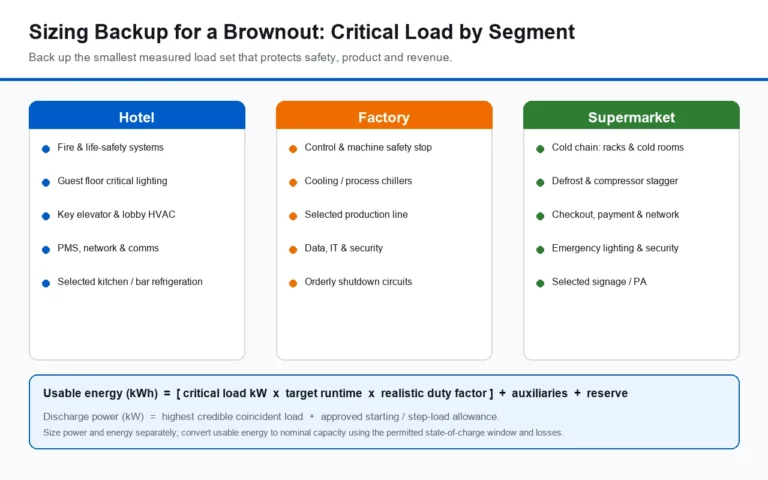

Size a battery energy storage system from the smallest measured load set that protects safety, product, and revenue – not from a percentage of the building or the connected load. For a Philippine hotel, factory, or supermarket facing rotational brownouts, the right battery energy storage system size comes out of your interval data and your outage objective, and it will almost never be 100% of the load.
This guide walks through how to build that number segment by segment: classify the load first, separate power from energy, and then match the equipment class to a market where brownouts are a recurring event.
Start with the business outcome, not the panel
The first question is not “how big a battery can we buy?” It is what the site must still accomplish 15 minutes, one hour, and four hours into an interruption: keep guests safe and operating, keep the line producing or shut down cleanly, keep the cold chain alive and transactions going.
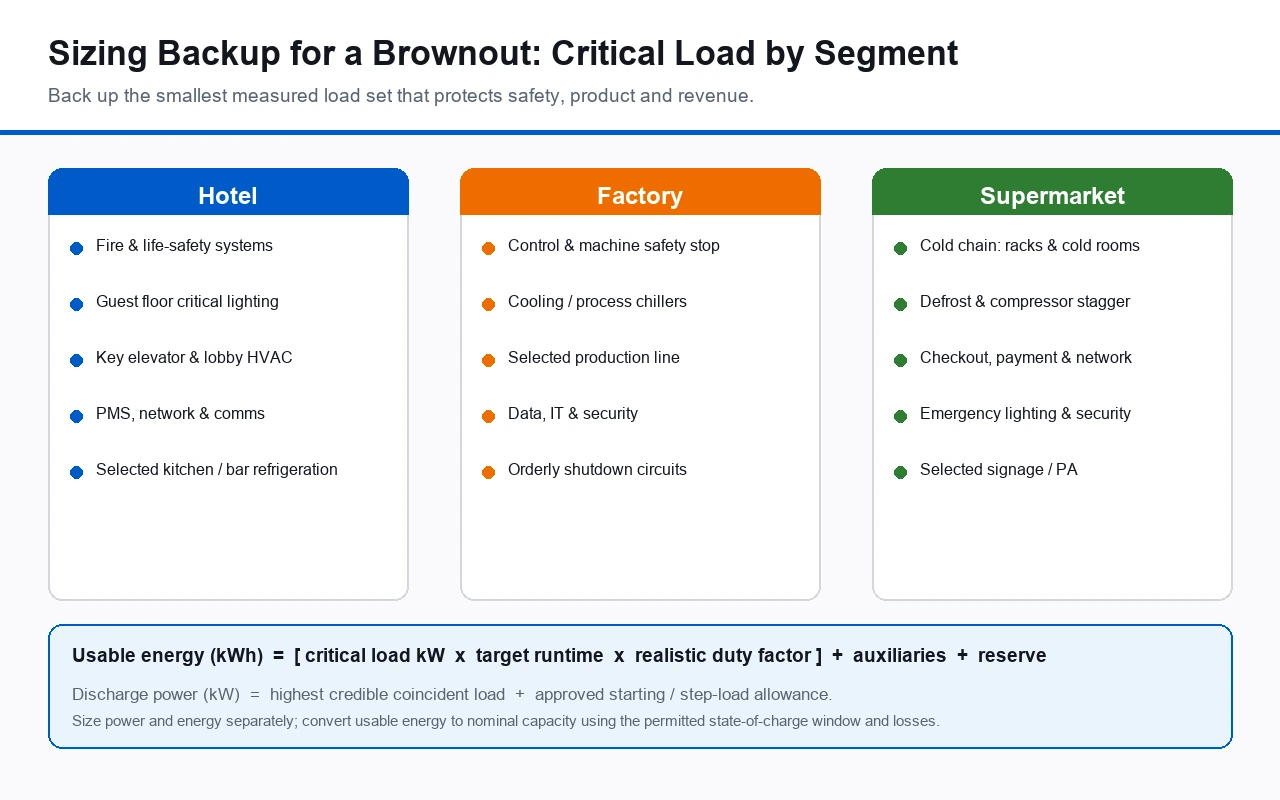
| Segment | Protect first | Protect second | Usually shed |
| Hotel | Fire & life-safety, security, network | Guest floors, key HVAC, PMS | Comfort cooling, signage, kitchens |
| Factory | Machine safety, controls, cooling | Selected production line, IT | Non-critical lines, comfort HVAC |
| Supermarket | Cold chain, checkout & network | Selected lighting, PA | Comfort AC, decorative lighting |
Build a measured critical-load schedule
Nameplate totals overstate. Compressors cycle, defrosts run in blocks, checkout load varies with trading activity. Capture interval data and verify circuits with the facility team; a four-column schedule (load group / data to capture / outage decision / control requirement) is enough to start.
Motor starting is a sequence, not a number: record which controllers restart automatically, how long each start lasts, and what delay is programmable between groups. Staggered restart can cut the required inverter power without touching product temperature.
Separate power from energy
Power (kW) decides whether the system carries the largest credible combination of running loads plus permitted starts; energy (kWh) decides how long. Mixing the two is the most common reason a quote looks right and disappoints in a real brownout.
Usable energy (kWh) = [load kW x runtime x duty factor] summed + auxiliaries + reserve.
Discharge power (kW) = highest credible coincident load + approved starting allowance.
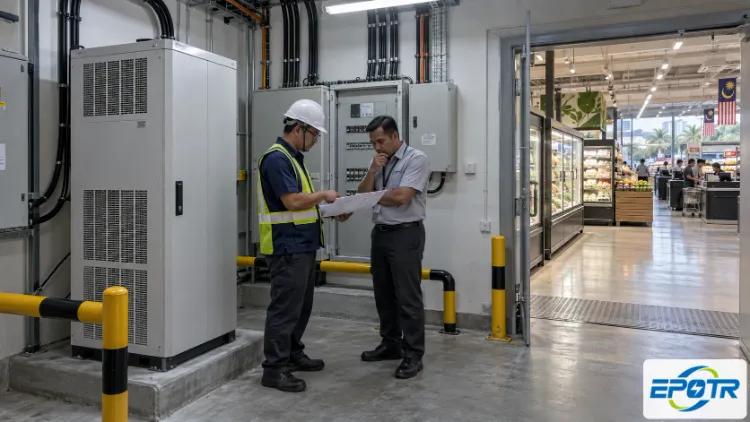
Worked example (illustration, not a design value): a supermarket critical set of refrigeration 18 kW + checkout and IT 4 kW + essential lighting 3 kW + controls 1 kW is about 26 kW steady. A four-hour ride-through is roughly 104 kWh before losses, auxiliaries and reserve – which points to a usable energy design in the 120-140 kWh class, while the inverter size is likely set by compressor starts rather than the 26 kW average.
What changes when brownouts are scheduled
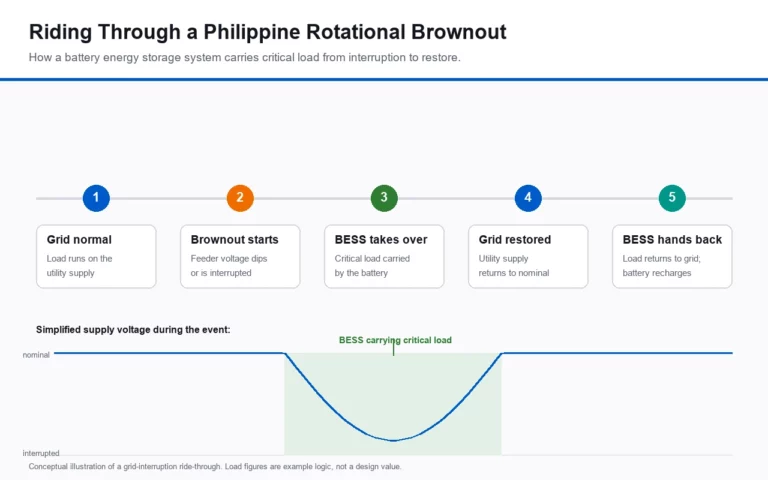
The Philippine case differs from a random outage: rotational brownouts are announced in advance. That changes what the battery is for – from “how long can I survive” to “do I have enough ride-through, and should I pre-cool, pre-charge, or pre-shed before the window opens?” A system with EMS visibility and a programmable operating plan extracts more value from the same kilowatt-hours.
Equipment class
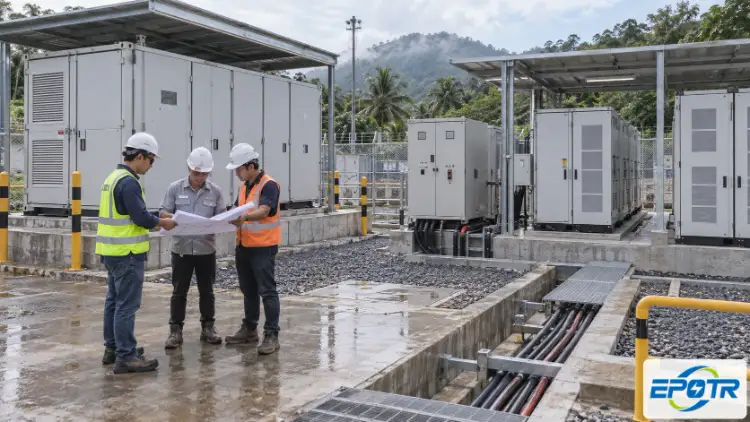
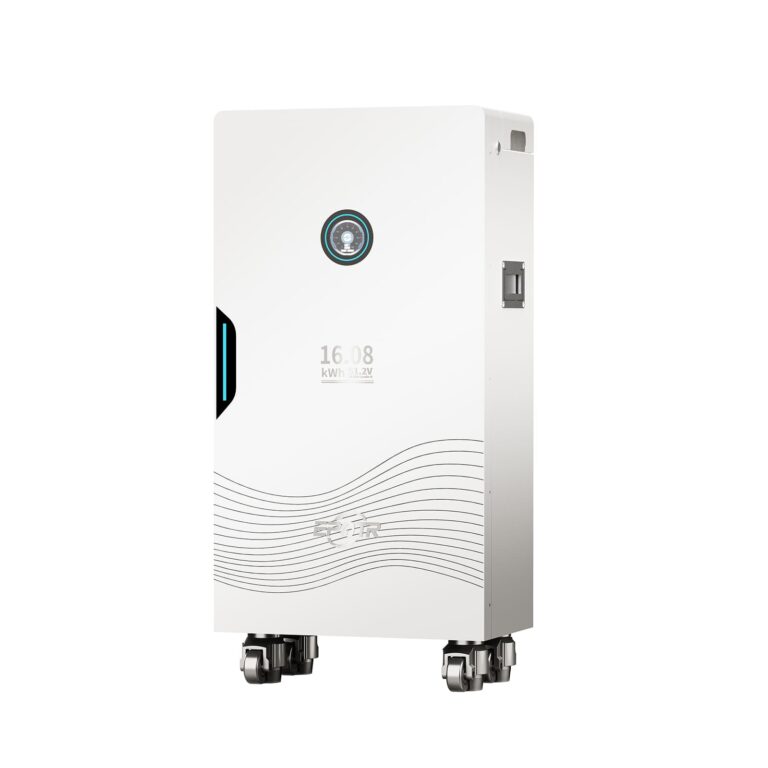
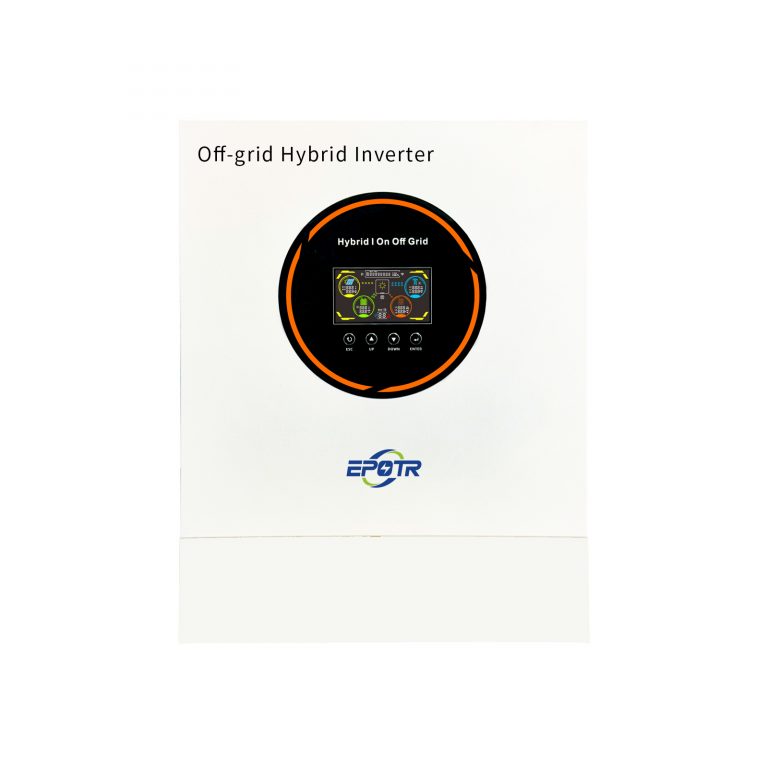
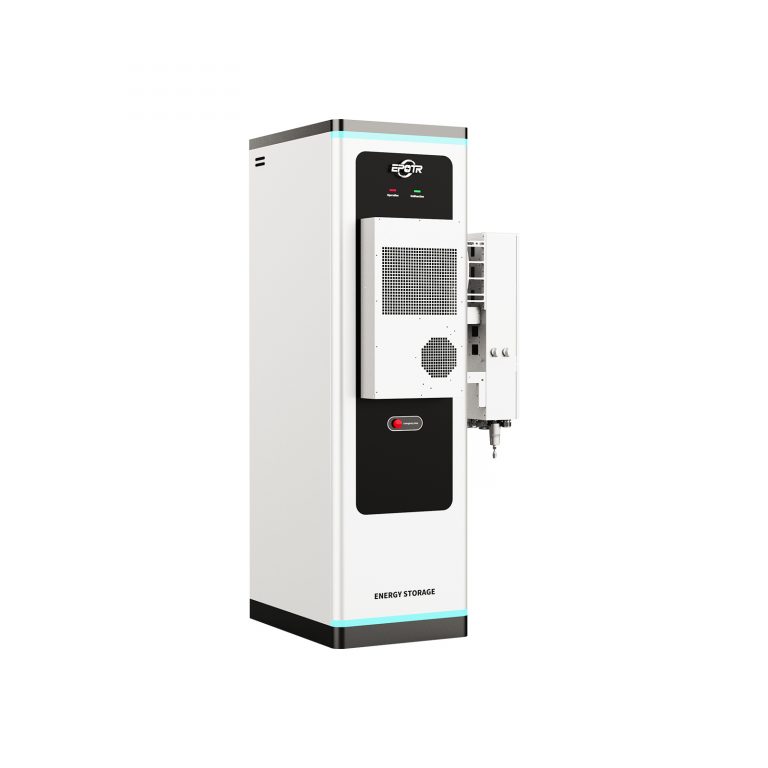
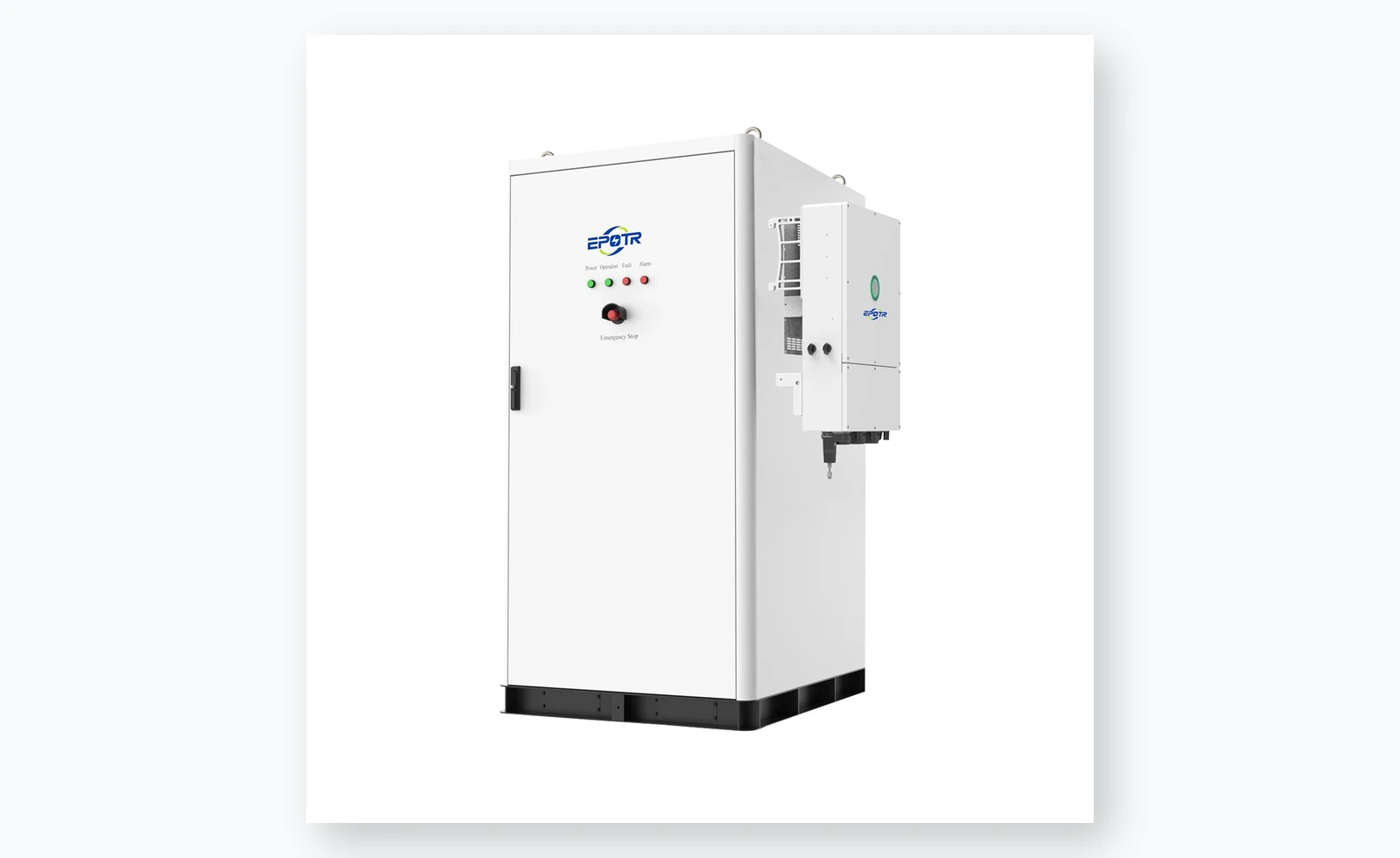
For the three segments above, the relevant EPOTR is the EP1 all-in-one hybrid C&I ESS: 50 kW, 57.3-100.3 kWh per unit, LiFePO4, 75 kVA of peak output for five seconds, generator connection, on/off-grid operation, IP55, and parallel expansion. Hotels and supermarkets typically start with one or two units; factories scale up through the commercial and industrial energy-storage range. The energy solutions team can run the early architecture, and a site-specific configuration review is the right step before any purchase.
Commission the plan, not the hardware
- Loss-of-grid detection and transfer without unsafe backfeed.
- Staggered restart of the largest approved load step.
- Automatic shedding at each state-of-charge threshold.
- Critical circuits through the complete transition.
- Alarm history and operator handover.
A witnessed site acceptance test that reproduces these decisions is the cheapest insurance a brownout-prone site can buy.
Frequently asked questions
Is two hours of backup a safe default?
No. Two hours may be excessive for a ride-through objective or inadequate for a cold-chain one. Use your outage objective and measured demand.
Can one battery replace my UPS and my generator?
Sometimes functions consolidate, but the answer depends on transfer time, power quality, autonomy, and the site’s recovery plan. Do not assume a battery energy storage system covers every UPS or generator function.
Should refrigeration always be the first priority?
In a supermarket it is usually the leading business-continuity load, but life-safety systems and controls may have no permissible interruption. The priority list should reflect your food-safety procedure, thermal inertia, and how the store operates during the event.
What should I send for a preliminary review?
Recent interval demand, a single-line diagram, a circuit-level critical-load list, motor data, target runtime, generator details, tariff information, and photographs of the installation space. A site-specific configuration review is the next step once those inputs are assembled.
The practical rule
Back up the smallest measured load set that protects safety, product, and the trading level you have chosen – then validate power, energy, controls, and restart behavior separately. A well-scoped battery energy storage system is more resilient than a larger one connected to an undefined “essential” panel, because everyone knows exactly what it will carry and how it will respond as the brownout develops.