
Yes, in some installations. Adding solar battery storage doesn’t necessarily mean scrapping a working PV inverter. An AC-coupled design can leave it in service and give the battery its own inverter, also called a power conversion system. The qualification is that the complete arrangement must suit the factory’s connection and controls. Retaining an inverter for grid-connected operation is a different proposition from expecting it to run during an outage.
For a Malaysian factory, this is a purchasing decision as much as an electrical one. A battery intended to absorb midday surplus may have no outage duty at all. If the factory also expects it to keep a production line running, that second job has to appear in the design and price. The two uses should not be bundled into a vague promise of energy independence.
Start with the solar energy the factory can actually store
A large rooftop array does not necessarily leave much energy for a battery. A factory running machinery throughout the day may already consume most of its solar production. Another site may have spare generation on weekends but need stored energy mainly on weekday evenings. Monthly totals hide that mismatch.
The records need to share a timeline: PV generation, factory demand, and power crossing the grid meter. A production shift and a quiet Sunday tell different stories. Fifteen-minute readings can support an initial energy estimate, but faster control and protection questions may call for finer data. Annotating shutdowns, seasonal changes, and export restrictions prevents a convenient-looking sample from being mistaken for a normal year.
Suppose the factory has a steady 30 kW surplus for two hours. That gives 60 kWh before charging losses, not an instruction to order a 60 kWh battery. Can the equipment accept that charging power? Is there room left in the battery when the surplus arrives? How much energy must remain untouched for backup? The answers determine how much of those two hours the site can use. One sunny day cannot establish annual savings.
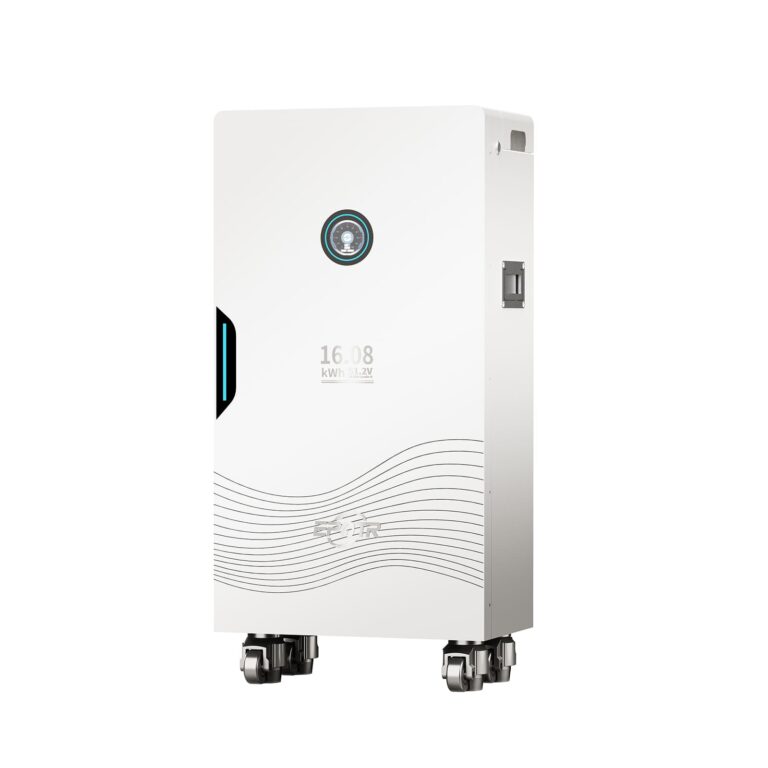
Use this profile to screen the EPOTR commercial and industrial ESS range by the required duty. With little solar surplus, a project relying on self-consumption alone has less energy to work with, however impressive the array’s nameplate capacity looks.
Compare two retrofit routes before choosing equipment
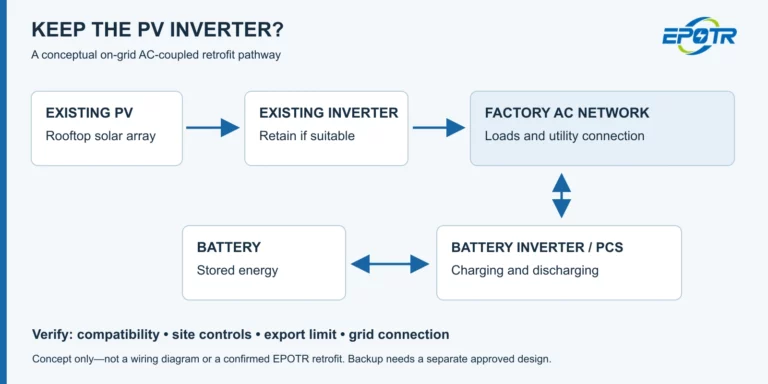
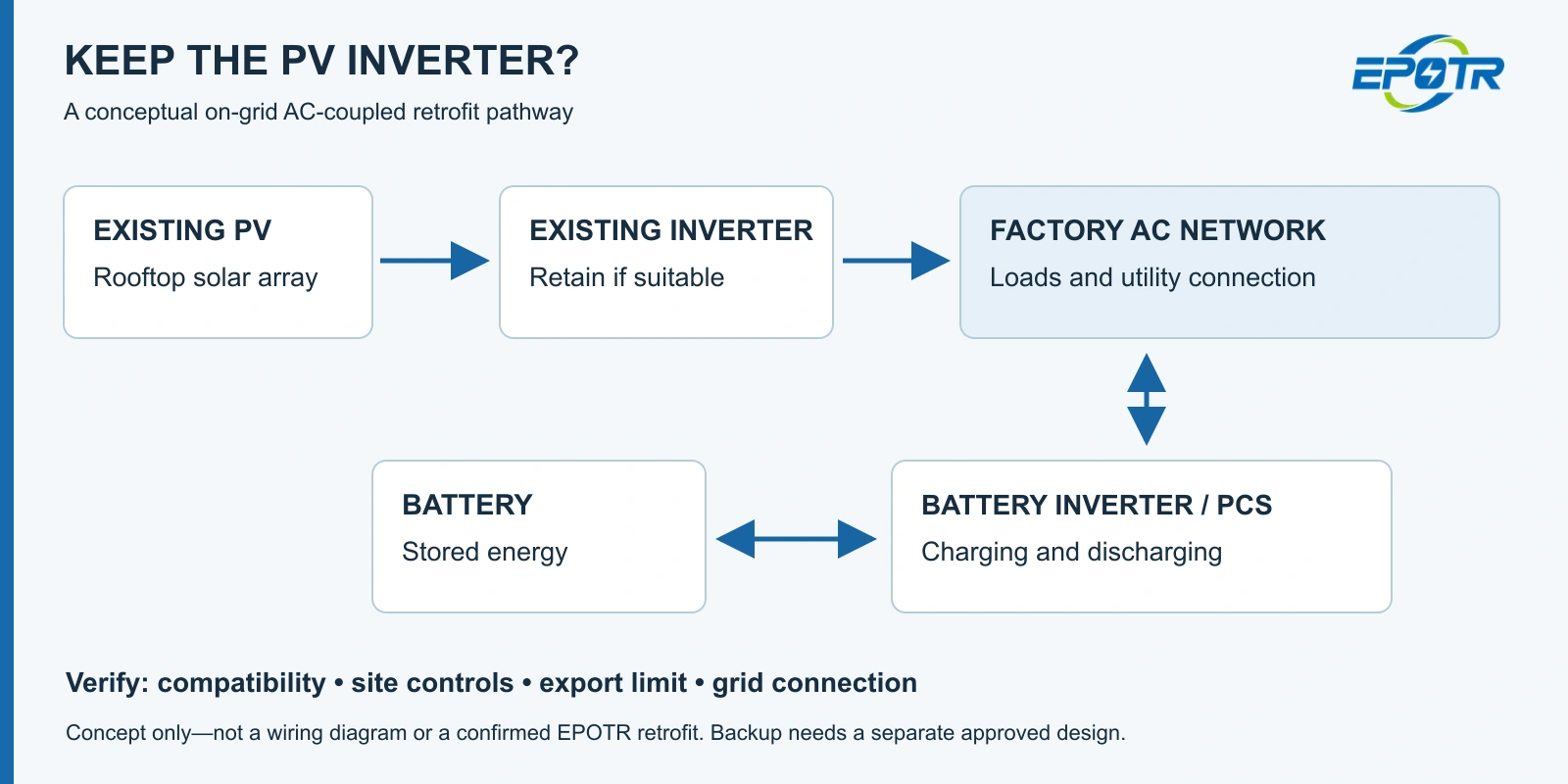
Keep the PV inverter and add AC-coupled storage
Here the PV inverter keeps its original job: converting the array’s DC output to AC. The new, compatible battery inverter does the charging and discharging through the factory AC network. They do not have to share a battery port, but they do have to fit an engineered system with appropriate protection and controls.
The attraction is practical: a useful PV asset stays in place, and its DC strings may not need to move. Work does not disappear, though. The switchboard may need attention, cable routes take space, and metering and communications need testing. Keeping the inverter also says nothing about how long production must stop for connection work. Put that shutdown in the plan.
Replace or reconfigure around a hybrid inverter
An inverter already due for replacement changes the calculation. So does an array being altered anyway. In either case, a hybrid arrangement may deserve the engineering work needed to bring PV and storage under more integrated control. Its inputs and MPPT arrangement must accept the existing string voltages and currents; moving or changing the strings may be substantial work. Battery matching and grid connection still need their own checks.
For a smaller three-phase installation, the EPOTR three-phase HV hybrid inverter range is one category to assess against the actual load. It is not a like-for-like replacement for an unspecified factory inverter.
| Decision | Retain the PV inverter | Replace or reconfigure it |
| Existing asset | Assess condition and remaining service life | Consider when replacement is already due |
| Integration work | AC connection, battery conversion, metering, and coordinated controls | PV strings, hybrid conversion, battery matching, and controls |
| Open question | Can the exact equipment work together in every required mode? | Does the revised design fit the existing array and site? |
| Bid comparison | Complete installed scope and acceptance tests | The same operating duty and tests |
Keeping the inverter does not automatically keep solar running in an outage
An ordinary grid-following PV inverter needs a voltage and frequency reference to follow. Once utility power disappears, the battery must be part of a properly designed backup system if the factory expects that PV inverter to keep producing. Having stored energy is not enough to create a safe island.
The difficult moment may come after the island is already running. If a production line stops while sunlight is strong and the battery is full, generation must come down because there is nowhere for the surplus to go. This requires a compatible means of regulating PV output, alongside the grid-forming, isolation, and coordinated protection and control arrangements assessed for backup. An on-grid charging test never puts the equipment in that situation.
The phrase “AC coupling supported” leaves too much open. It could describe on-grid charging without saying anything about outage operation. A useful compatibility statement ties the promised modes to named inverter and controller models, including firmware. Without that link, there is nothing definite for the buyer to accept.
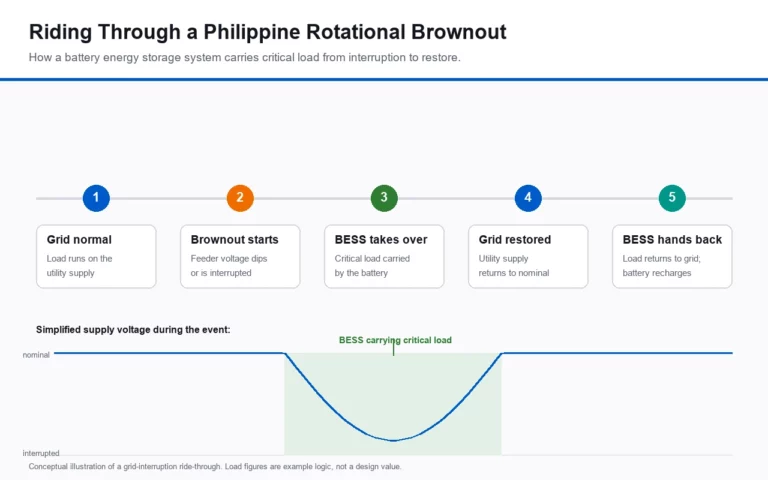
A site that only wants to shift solar can keep backup outside the purchase. Where backup is wanted, the list of supplied circuits and their tolerable interruption time becomes part of the brief. Neither case justifies assuming that the entire factory will stay powered.
Make export control a site-wide responsibility
Adding a second controller introduces a question the original PV installation may never have faced: who is in charge of power at the utility connection? The battery controller and PV export limiter should not be left to work that out independently. A drawing should show the measurement point, while the control description explains how the devices coordinate their responses.
Bring the full-battery and falling-load cases into the acceptance plan, along with a relevant communication failure. The installer must establish and demonstrate safe responses under controlled conditions. Factory staff should not have to experiment with protection settings to discover what the controls do.
For a Malaysian project, put the Energy Commission’s BESS safety guidelines in front of the professionals responsible for the design. They must determine the site’s applicable installation, connection-approval, and fire-safety requirements. A record of installations elsewhere cannot answer that local compliance question.
Where an integrated EPOTR system belongs in the comparison
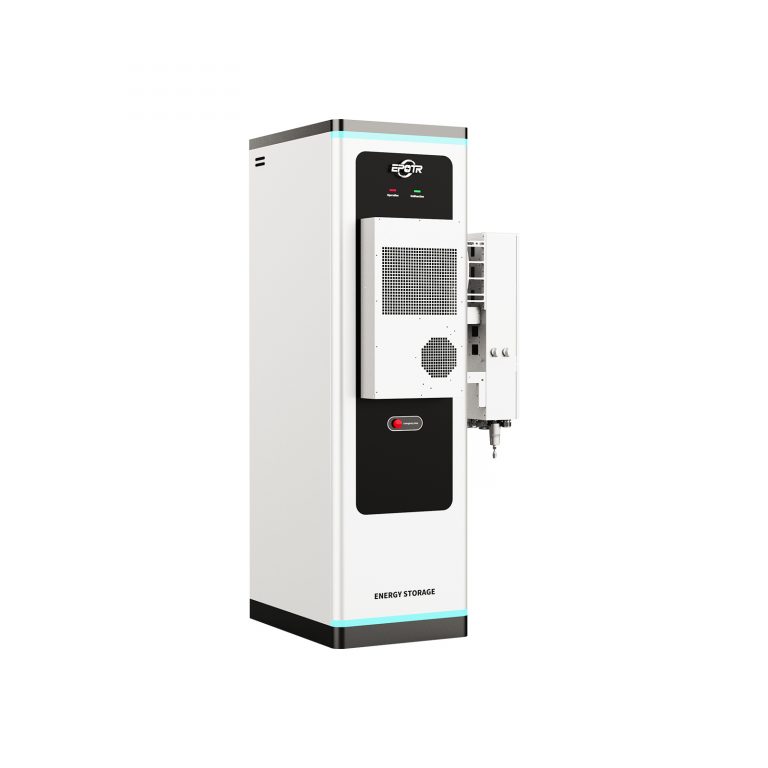
إن EPOTR EP1 all-in-one hybrid ESS sits in the 50 kW rated AC class, with rated battery configurations from 57.3 to 100.3 kWh. It is a candidate to examine when that size fits the duty. Neither number answers the compatibility question, and neither is a backup-runtime guarantee.
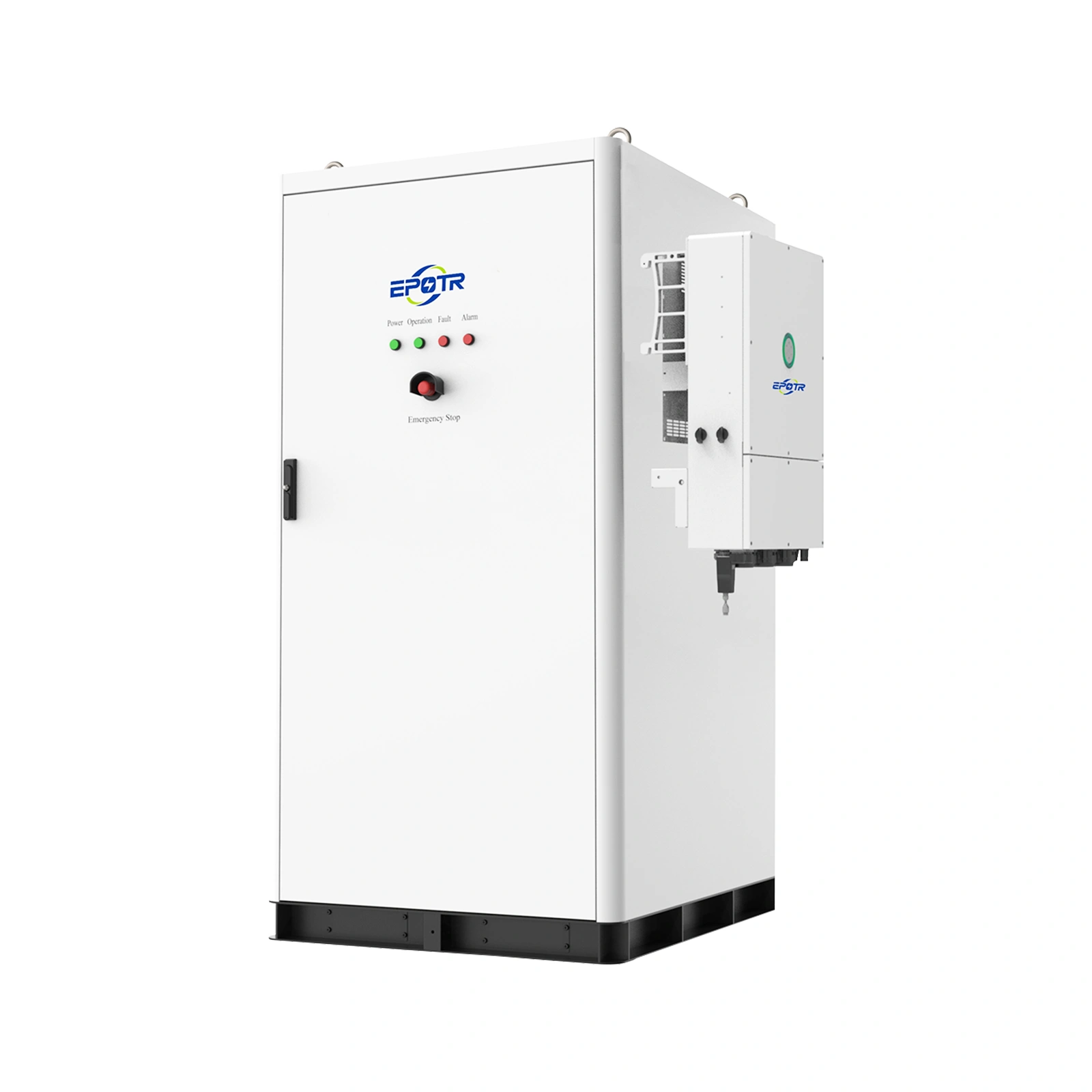
For this retrofit enquiry, EPOTR would still need to show where the old inverter sits in the proposed architecture. The drawing and scope should make clear when it runs and which extra controls are needed. If that arrangement cannot be confirmed, keeping the inverter remains an unresolved requirement, whatever capacity the cabinet offers.
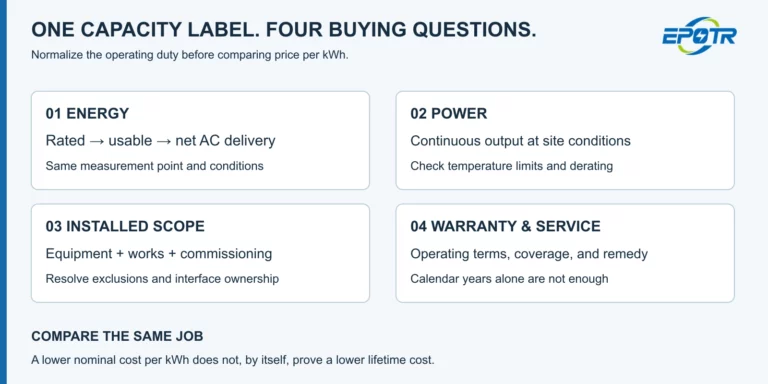
Compare the incremental project cost, not just the cabinet price
The relevant investment is what the factory must add to the PV plant it already owns. A cabinet-only figure leaves out much of that decision. Engineering and approvals cost money; controls need commissioning; electrical works may consume a production shutdown. Retention also postpones rather than abolishes the old inverter’s eventual replacement, so its condition and remaining warranty belong in the cost model.
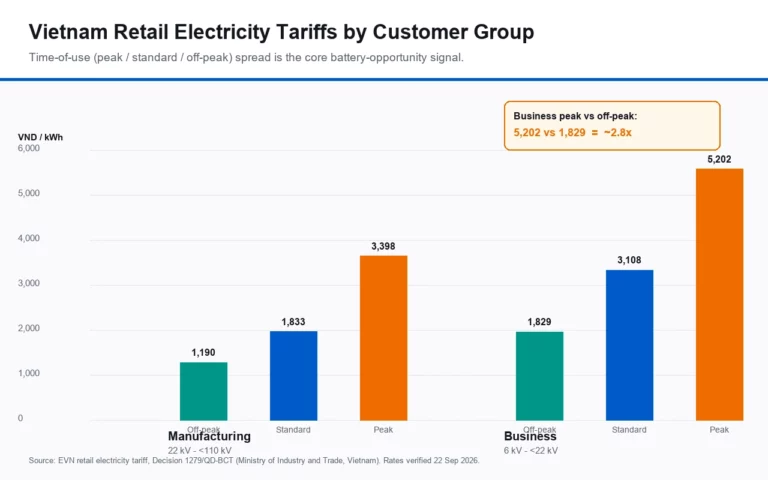
Use the factory’s tariff and operating records to calculate the benefit. Solar electricity diverted into a battery carries the value of any direct use or export it displaces, and some of it is lost during charging or consumed by auxiliaries. There may also be an outage reserve that the daily schedule cannot touch. A savings forecast has to work with what remains, not with the entire nameplate capacity every day.
Compare like-for-like scopes. Leaving out a controller makes a quotation look cheaper, not a retrofit simpler. Removing a healthy inverter also needs an economic justification beyond a tidier system drawing.
What to send before requesting a retrofit proposal
An enquiry can start with the single-line diagram, inverter model and firmware, array details, and interval readings. Add the export-control arrangement, connection conditions, site location, and available space. The production shutdown window is worth stating just as clearly as the desired delivery date.
Request an EPOTR retrofit assessment around those inputs. Look for a priced scope showing how the proposed arrangement works in each required mode, with compatibility conditions and tests. That is enough to move the discussion from whether a battery can be added to whether this particular retrofit is worth buying.
الأسئلة الشائعة
Does every existing solar inverter accept a battery connection?
No. A PV input is not a battery connection unless the exact equipment is designed for that use. Where there is no compatible battery port, an engineered AC-coupled arrangement uses a separate converter instead.
Is AC coupling always cheaper than replacing the inverter?
The old inverter is one avoided purchase, not the entire retrofit budget. Additional conversion, switchgear, controls, and integration may absorb that saving. Compare the completed installation for the same duty.
Can solar battery storage guarantee zero export?
Not by the presence of a battery alone. Export performance depends on the controls, metering, available charging capacity, response times, and agreed connection requirements. Specify how the complete system will be verified.