
By specifying the DOD at 95% nearly 100% of the rated energy will be useable with a small amount of reserve power. Thus for a 16.08kWh battery 95% DOD = 15.28kWh of useable energy. This is very close to the ‘useable energy’ figures for the floor-standing residential system covered in this energy storage guide, i.e. 15.27kWh.
Additional useable capacity matters for extra power in the evening for households in Indonesia, the Philippines, Malaysia, Vietnam and other Southeast Asian markets. Evening use of air-conditioning, refrigeration, water pumps, lights, internet and occasional outages on the grid all require stored energy.
Still, 95% DOD does not mean unlimited backup time. Your actual result also depends on load size, inverter losses, temperature, reserve settings, and battery age.
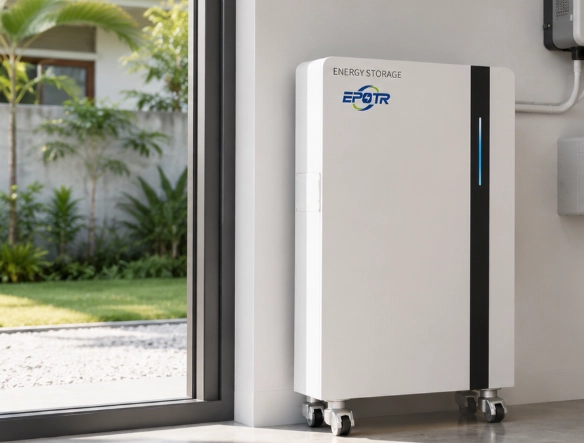
What Does 95% Depth of Discharge Actually Tell You?
Depth of discharge, usually shortened to DOD, shows how much of the battery’s rated capacity has been used. A higher DOD gives you more usable energy from the same cabinet.
The key point is simple. A 95% DOD rating means you may discharge up to 95% of the rated energy under the recommended system settings, leaving about 5% inside the battery.
How Does the Calculation Work?
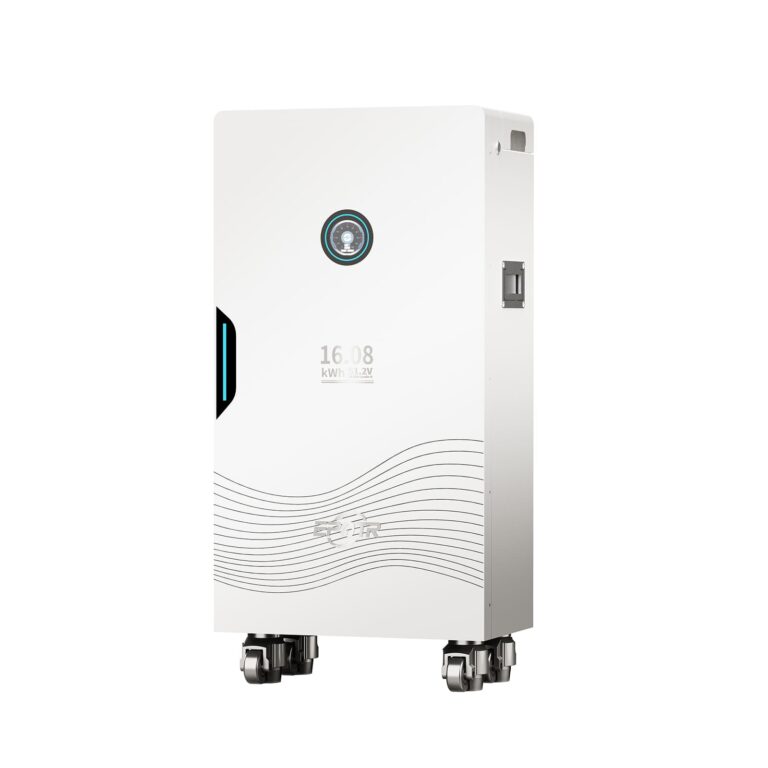
The rated energy of the Home Energy Storage System Floor-Standing ESS is 16.08kWh.
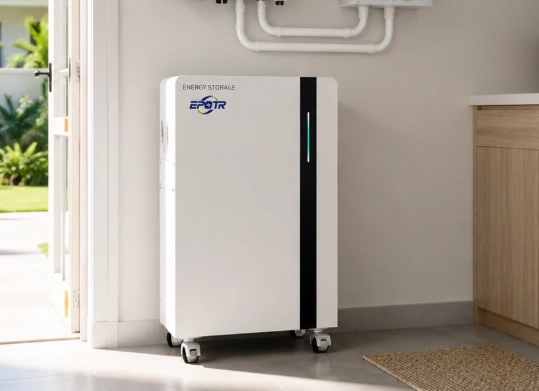
The usable capacity calculation is:
16.08kWh × 95% = 15.276kWh
Rounded down, that is approximately 15.27kWh of usable DC energy.
This close match between calculated and listed usable energy makes the specification easier for buyers to check. The product also uses a 51.2V low-voltage architecture and a 314Ah LiFePO4 battery pack.
| Specification | Listed Value |
| Rated Energy | 16.08kWh |
| Usable DC Energy | 15.27kWh |
| Maximum Recommended DOD | 95% |
| Nominal Voltage | 51.2V |
| Rated Capacity | 314Ah |
Does 95% DOD Mean 15.27kWh Reaches Your Appliances?
Not quite. The listed figure is usable DC energy. Electricity still passes through the inverter before reaching AC appliances.
For preliminary planning, a buyer may apply a 90% conversion and operating factor:
15.27kWh × 90% = 13.74kWh
That does not replace an inverter datasheet or site calculation. It simply gives you a safer working figure for early load planning.
How Much Daily Backup Can 15.27kWh Provide?
Backup duration depends more on average load than on the number of appliances. A refrigerator may have a high starting current but a much lower average hourly draw. An air conditioner may vary its power as the room cools. Pumps are another common trouble spot because their starting surge can be much higher than normal running power.
Before buying, you should separate essential loads from optional loads. Keeping every air conditioner and water heater active during an outage can empty a residential battery quickly.
Practical Runtime Examples
The following estimates use 13.74kWh as a conservative available AC-energy figure.
| Average Running Load | Approximate Runtime |
| 500W | 27.5 Hours |
| 1kW | 13.7 Hours |
| 1.5kW | 9.2 Hours |
| 3kW | 4.6 Hours |
| 5kW | 2.7 Hours |
A 1.5kW essential-load group could include a refrigerator, several fans, lighting, Wi-Fi equipment, television, and one efficient air conditioner operating intermittently. Actual runtime can move in either direction. Hot weather often pushes air-conditioning demand higher, and frankly, many household estimates miss that part.
The floor-standing system supports up to 7.68kW charging power and 10.24kW maximum discharging power. Power and energy should not be confused. The 10.24kW figure shows how fast energy may be delivered, while 15.27kWh shows how much energy is available.
Will Frequent 95% Discharge Shorten Battery Life?
A high usable capacity is valuable, but you should also check the cycle-life test conditions. A battery specification is only meaningful when the DOD, temperature, charge rate, and end-of-life threshold are stated.
The product documentation lists 6,000 cycles at 90% DOD, 25°C, a 0.5C test rate, and 60% remaining capacity at end of life. It does not state 6,000 cycles at 95% DOD. That small distinction matters during tender reviews.
Why 90% and 95% DOD Should Not Be Mixed
The product allows a maximum recommended DOD of 95%, while its published cycle test uses 90% DOD. In daily operation, you may choose different settings:
95% DOD when longer backup time is the main priority
90% DOD for a balance between usable energy and battery ageing
80% to 85% DOD when the system cycles every day and backup demand is modest
A larger reserve during storm seasons or unstable-grid periods
LiFePO4 chemistry, overcurrent protection, overvoltage protection, undervoltage protection, short-circuit protection, and overtemperature protection support safer daily operation. The battery communicates through CAN and RS485, which also helps the battery management system exchange operating data with a compatible inverter.
Is the Floor-Standing ESS Suitable for Southeast Asia?
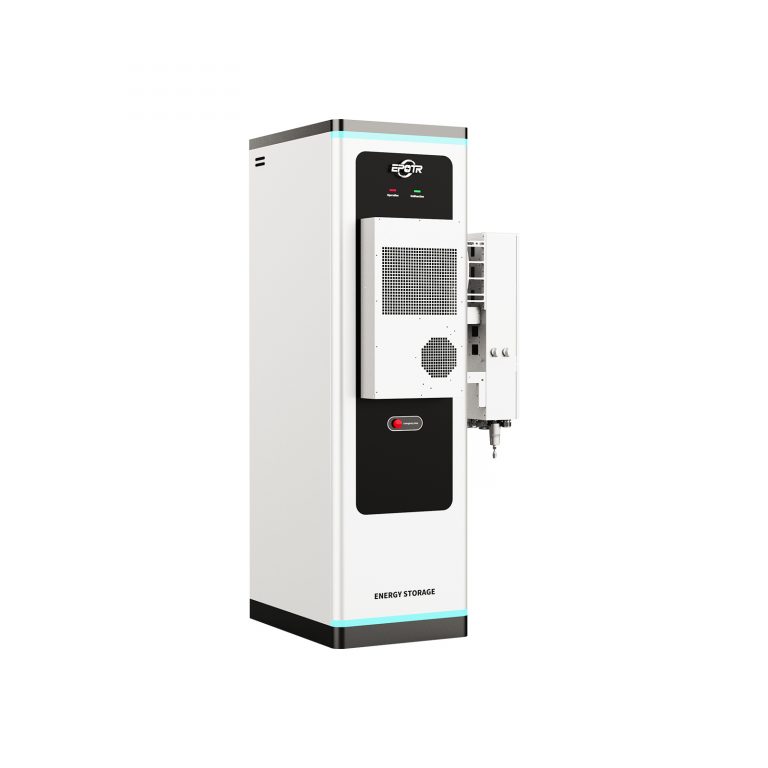
EPOTR supplies low-voltage batteries, hybrid inverters, and broader energy storage products for residential and commercial applications. For Southeast Asia, product selection should start with the installation environment rather than capacity alone.
The floor-standing model uses natural cooling and does not require an active cooling system. Fewer fans can mean less noise and fewer moving parts. However, natural cooling still needs clear space around the cabinet.
What Does IP20 Mean for Installation?
The battery has an IP20 protection rating. It is an indoor product, not a weatherproof outdoor cabinet.
It should be installed in a clean, dry, ventilated area such as:
- An indoor utility room
- A protected electrical room
- A dry garage above flood level
- An enclosed service space with controlled ventilation
The listed standard ambient range is 0°C to 40°C, while charging is allowed from 0°C to 55°C. Relative humidity is listed at 5% to 95%, with no condensation. In tropical markets, that last condition is important. High humidity alone may be acceptable, but water droplets forming inside electrical equipment are not.
Avoid placing the cabinet beside an open window, under a leaking roof, or in a low room that regularly floods. A battery raised 100mm from the floor is still not a flood-control plan.
Why the Metal Floor-Standing Cabinet Can Help
The cabinet measures 871 × 450 × 250mm and weighs 135kg. Its narrow 250mm depth can help when wall structure is unsuitable for a heavy battery. Floor installation also makes service access more straightforward in many existing homes.
The battery can be connected in parallel, with the documentation listing up to 25 units. That is far beyond the needs of a typical house, but it gives distributors and project designers room to cover villas, shared residences, and mixed-use buildings.
How Can It Work in an Island Microgrid?
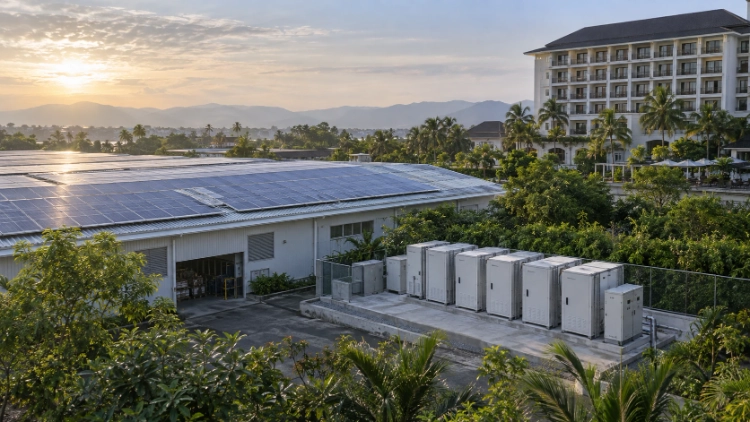
Across island-heavy parts of Southeast Asia, grid extension can be costly and electricity quality may vary from one location to another. A solar-storage microgrid can combine PV panels, an inverter, battery packs, and household loads into a local power system.
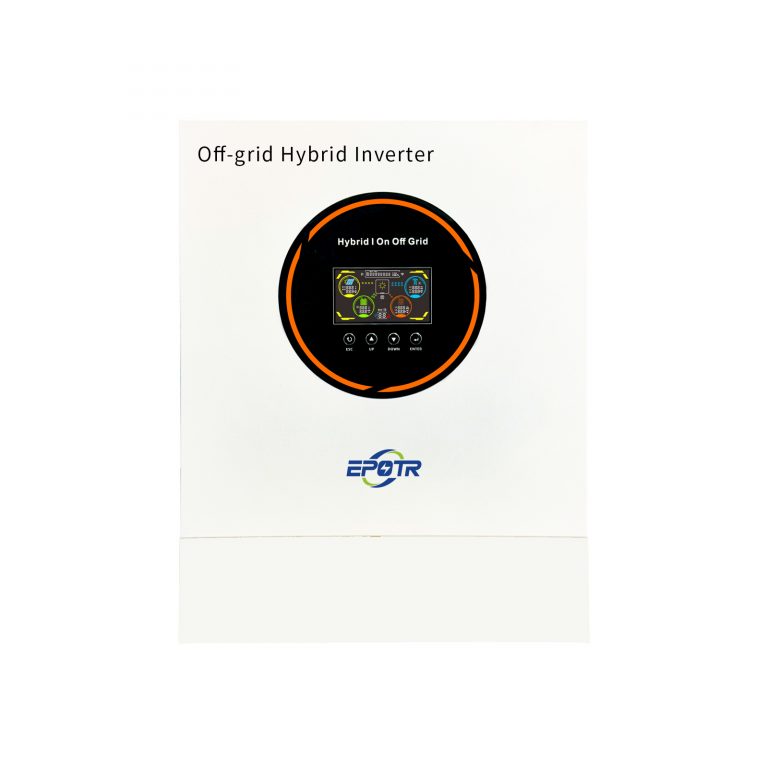
EPOTR’s off-grid inverters are indoor, IP20, wall-mounted units. They can work with solar panels and energy storage batteries to support independent household microgrids in areas such as Indonesia, the Philippines, and Malaysia.
What Should You Check before Pairing the Battery and Inverter?
Compatibility involves more than matching “48V” on two brochures. You should confirm:
- Battery voltage range
- Maximum charge and discharge current
- CAN or RS485 communication
- Battery protocol support
- Inverter surge power
- PV input limits
- Generator or grid input settings
- Local earthing and protection rules
EPOTR battery products are designed to work with more than 90% of mainstream hybrid inverter platforms, while its off-grid inverters also support many battery-pack suppliers. Wide compatibility can reduce sourcing risk for distributors, but protocol confirmation is still needed before shipment.
More system configurations are available through the company’s residential and commercial energy solutions.
When Is a Modular Battery the Better Choice?
The floor-standing 16.08kWh model suits homes with higher evening demand or longer backup requirements. It may be larger than necessary for a small shop-house, clinic, café, or family business.
A newer Modular Battery model provides a lower entry cost and uses less floor area. You can select capacity closer to the present load, then consider expansion when electricity use grows. This approach is useful for merchants of different sizes because they do not have to pay for unused battery capacity on day one.
For buyers comparing several product families, the EPOTR company profile also covers its work in battery manufacturing, power electronics, solar equipment, software, IoT services, and system integration.
What Should You Confirm before Ordering?
A good quotation should be based on your daily load curve, not only the monthly electricity bill. Ask the installer or supplier to review:
- Daytime and nighttime energy use
- Peak appliance power
- Motor and compressor starting current
- Required backup hours
- Existing solar-panel capacity
- Indoor temperature and humidity
- Available installation space
- Inverter communication protocol
- Future expansion plans
The product documentation also lists CE, UN38.3, and MSDS information, plus a five-year warranty. Certification scope, warranty conditions, shipping requirements, and local approval should be checked for each project.
For model selection or compatibility review, send your load list, inverter model, solar-panel data, and installation photos through the EPOTR contact page.
FAQ
Q1: Does 95% DOD Mean the Battery Can Be Fully Emptied?
A: No. EPOTR lists 95% as the maximum recommended depth of discharge, leaving roughly 5% of rated energy inside the battery.
Q2: How Much Usable Energy Does the 16.08kWh Battery Provide?
A: EPOTR lists 15.27kWh of usable DC energy, which closely matches 16.08kWh multiplied by 95%.
Q3: Can the Battery Run an Air Conditioner during an Outage?
A: Yes, but EPOTR recommends checking the air conditioner’s running power, startup demand, other active loads, and the inverter’s output limit before calculating runtime.
Q4: Can the Floor-Standing Battery Be Installed Outdoors?
A: No. The EPOTR floor-standing model is rated IP20 and should be installed in a dry, protected indoor location without condensation.
Q5: Is 95% DOD the Best Setting for Daily Cycling?
A: Not always. EPOTR allows up to 95% DOD, but the listed 6,000-cycle test uses 90% DOD. A lower daily DOD may provide a better balance between backup energy and long-term battery ageing.