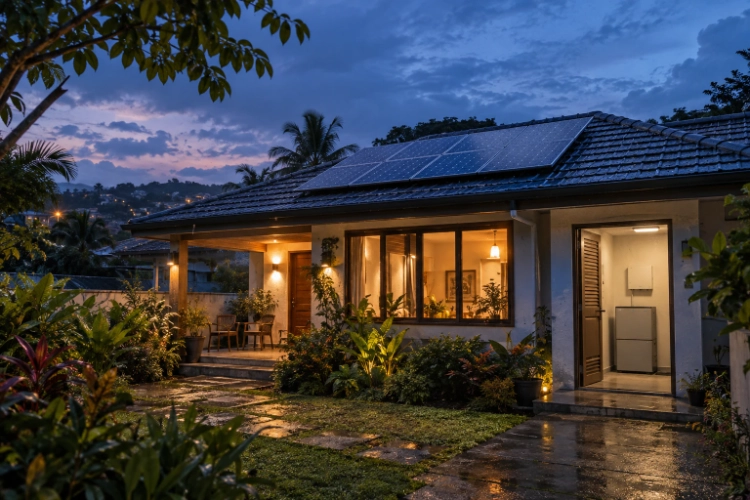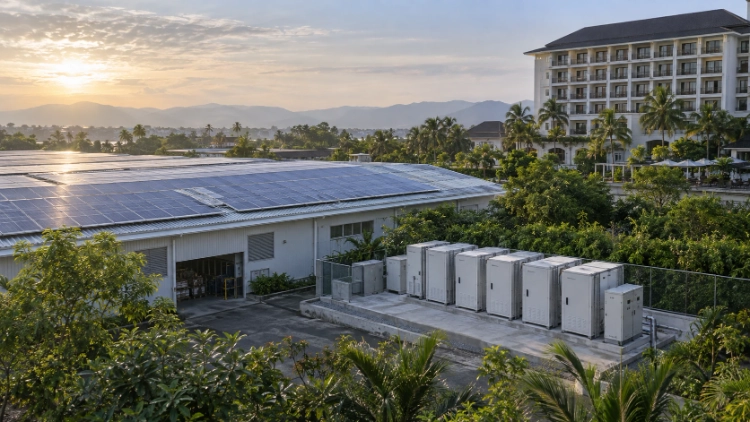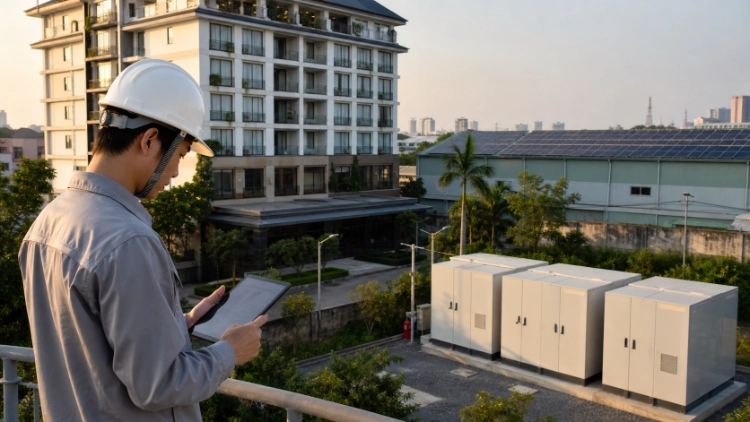

A 16kWh residential ESS is not chosen only because the number looks large. It should match daily solar surplus, night-time loads, backup priorities, inverter power, climate, installation space, and the local grid problem. In some markets, the main pain is high evening electricity cost. In island regions, it is unstable grid access. In small commercial sites, it may be diesel cost, lost sales during outages, or limited installation space.
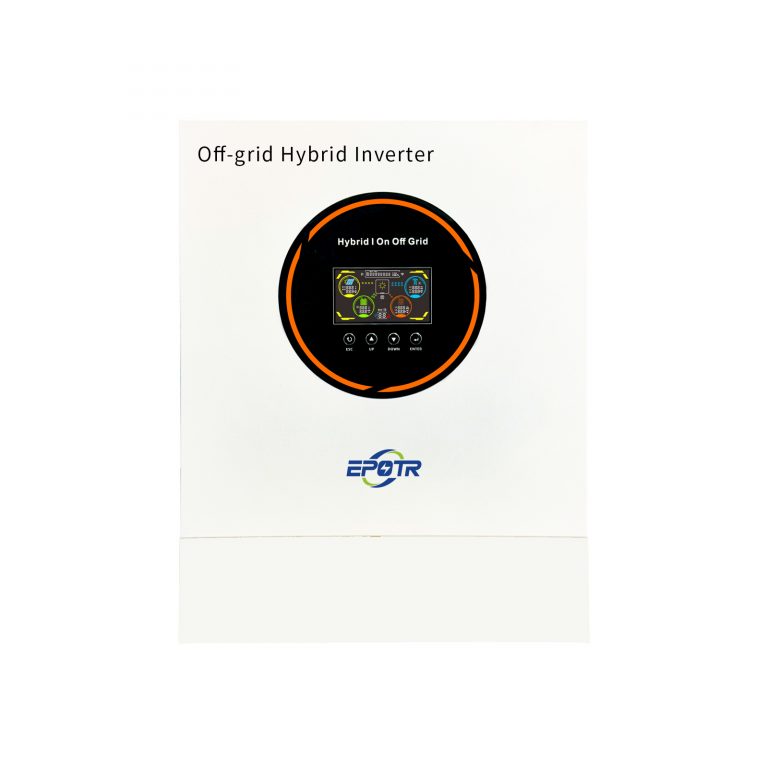
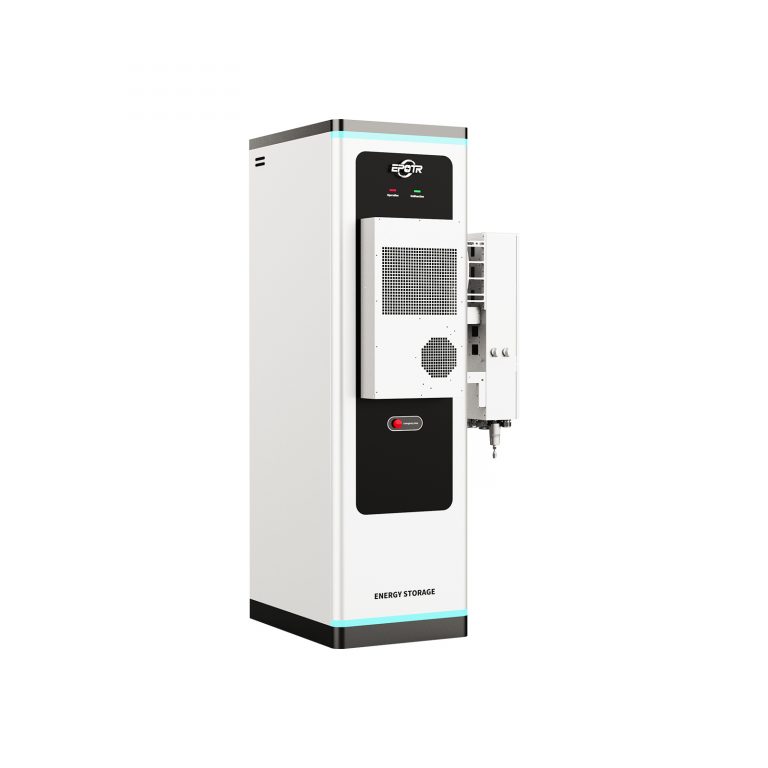
EPOTR positions its energy storage product lines around home battery packs, hybrid inverters, off-grid inverters, and C&I storage, with key product directions including compatibility, safety, smart control, economy, and efficiency. Its low-voltage residential ESS line also highlights natural cooling, high operational reliability, management control, and RoHS compliance.
Why Does 16kWh Make Sense for Residential Solar Storage?
A 16kWh system would be of a practical size and not too expensive as an emergency battery or to big and expensive as a commercial battery cabinet. The system is able to cover night load, backup load as well as part of the peak load shifting without getting too complex.
Match the Market Pain Before Matching the Battery
Different regions buy home ESS for different reasons.
In Southeast Asian island markets such as Indonesia, the Philippines, and Malaysia, grid stability and location matter more. EPOTR’s off-grid inverters are indoor, IP20-rated, wall-mounted units designed for residential use. Combining these panels with our battery packs enable to build up a completely solar powered and independent microgrid for houses on remote islands, small resorts, clinics, telecom shelters, shop etc. The material of our batteries states that they are compatible with more than 90% of the common hybrid inverter brands which are sold on the Chinese market. So there is no risk of matching problems and the customer is not bound to one inverter brand.
In Africa and Latin America, the pain can be sharper. The knowledge base mentions a Nigeria case where over 40% of the region has long-term power instability, while diesel power during outages can cost 3 to 5 times the normal electricity rate. After a solar-storage project was introduced, outages in the connected area were reduced by 70%, and industrial production efficiency rose by an average of 35%. For a home or small business buyer, that kind of problem makes storage less like an upgrade and more like daily operating equipment.
How Much Usable Energy Does a 16kWh Battery Really Provide?
The nameplate capacity is only the first number. A serious sizing plan should look at usable capacity, depth of discharge, peak power, cycle life, and how much load must stay on during an outage.
Start With Usable kWh, Not Sticker kWh
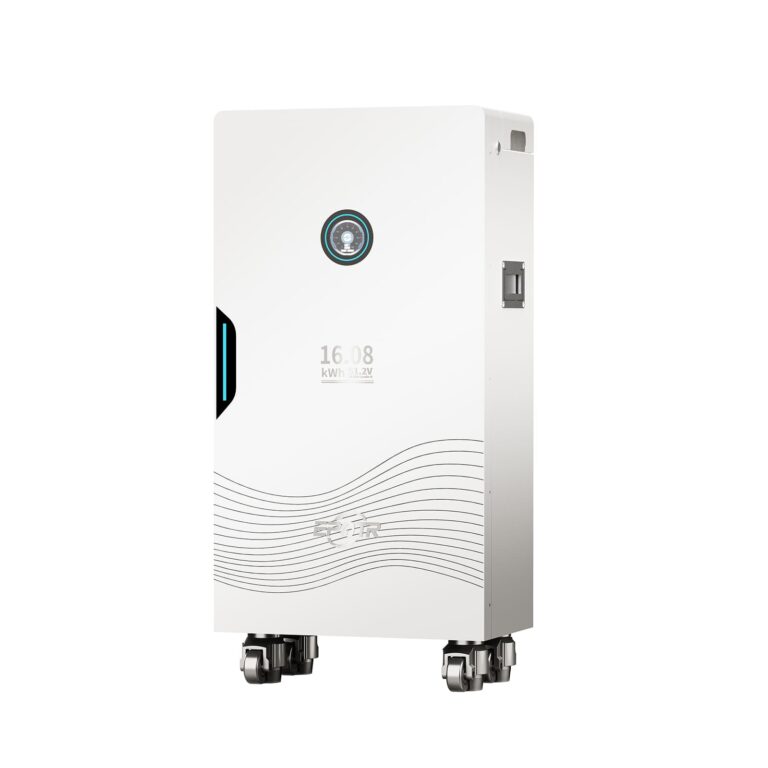
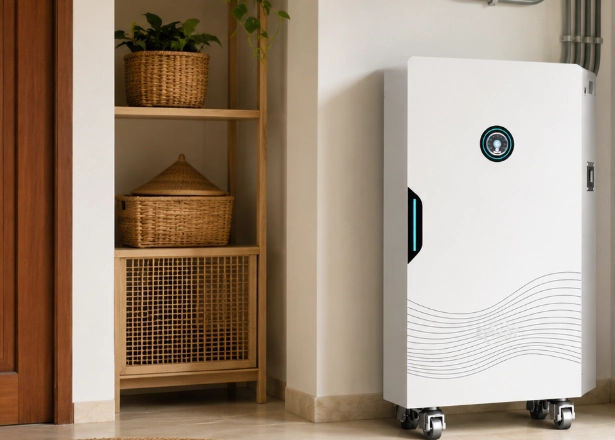
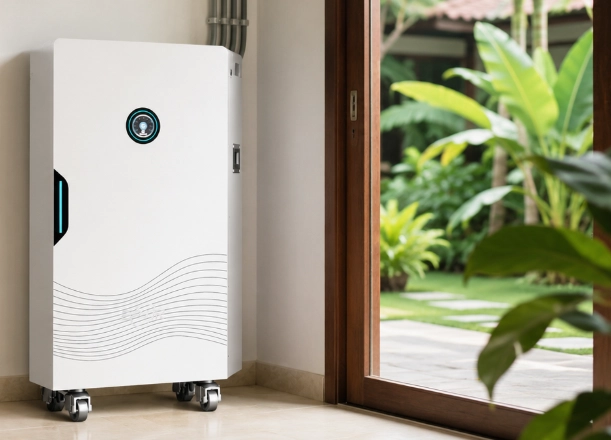
The EPOTR TaiPower 16kWh Home Energy Storage System Low-Voltage is a floor-standing low-voltage battery storage product for solar homes and backup power.
For daily planning, a conservative usable number is about:
16.08kWh × 90% DOD = about 14.5kWh usable energy
That does not mean every site should drain the battery deeply every day. A cleaner design keeps a reserve for outages, battery aging, cloudy weather, and sudden load spikes. In real projects, a 10% to 20% reserve is a normal habit, not overcaution.
Use a Simple Load Table Before Buying
A rough household backup plan may look like this:
| Load Type | Typical Power | Running Time | Energy Use |
|---|---|---|---|
| Refrigerator | 150W average | 12 hours | 1.8kWh |
| Lights and Router | 100W | 8 hours | 0.8kWh |
| Fans, TV, Laptop | 500W | 4 hours | 2.0kWh |
| Water Pump | 700W | 1 hour | 0.7kWh |
| Small Air Conditioner | 1000W | 3 hours | 3.0kWh |
| Inverter and System Loss Margin | 10% to 15% | Variable | 1.0kWh+ |
This sample lands around 9 to 10kWh. A 16kWh ESS can cover that with room left for reserve. If the site runs heavy air conditioning, electric heating, or many kitchen loads, the same battery may still work, but runtime drops quickly. That is why load priority matters.
What Backup Runtime Can a 16kWh ESS Support?
Backup runtime is not a fixed number. It depends on average load. The easy rule is:
Usable Battery Energy ÷ Average Load = Backup Hours
Using about 14.5kWh as a conservative usable figure:
1kW average load gives about 14 hours
2kW average load gives about 7 hours
4kW average load gives about 3.5 hours
These numbers are simple, but very useful during sales talks. Buyers often ask, “Can it power a home for one night?” The better answer is, “Yes, if essential loads are separated from comfort loads.”
Separate Essential Loads From Comfort Loads
Essential loads usually include:
- Refrigerator or freezer
- Lighting
- Router and security system
- Water pump
- Medical or office equipment
- A few fans or small appliances
Comfort loads may include:
- Large air conditioners
- Electric oven
- Electric water heater
- High-power laundry equipment
- Full-home backup without load control
For Southeast Asian island sites, fans, pumps, refrigeration, and communication equipment may matter more than heating. For European solar homes, evening self-consumption and controlled appliance scheduling may matter more. For small shops in weak-grid areas, the priority may be keeping payment devices, lights, freezer cabinets, and internet running. The same 16kWh battery can serve very different business logic.
How Should Solar Array and Inverter Choice Be Matched?
Battery sizing is only half of the job. The PV array must be large enough to charge the battery during good sunlight hours, and the inverter must be strong enough for both steady loads and starting surges.
Battery Size Should Follow Solar Surplus
A 16kWh battery works best when the site has real solar surplus. A practical starting point is to pair it with a PV system large enough to refill most of the daily discharge in one clear day. In many residential projects, this often means checking whether a 5kW to 8kW PV array can produce enough extra daytime energy after the house has already used part of the solar power.
For off-grid or weak-grid projects, EPOTR solutions can be planned around PV panels, indoor wall-mounted off-grid inverters, and battery packs. This structure is useful for island homes, rural buildings, and small merchant sites where the grid is unstable or diesel is too expensive for long daily use.
Check Peak Power Before Counting Runtime
The TaiPower 16kWh low-voltage model is not only about stored energy. Its 10.24kW max discharging power is important for short periods when multiple appliances start together. Pumps, refrigerators, and air conditioners can create startup surges. If the inverter and battery cannot handle that moment, a system with enough kWh may still trip.
That is a common sizing mistake. Runtime is about kWh. Starting and heavy loads are about kW and current. Both must be checked.
When Does Modular Battery Design Make More Sense?
Not every buyer needs the same physical design. Some sites want a clean floor-standing residential ESS. Some small businesses need a lower first cost and a smaller footprint. This is where Modular Battery design becomes useful.
Use Modular Battery for Lower Cost and Smaller Space
A newer Modular Battery model can help smaller merchants because its cost is relatively lower and its occupied area is smaller. It fits buyers who do not want to start with a large cabinet on day one.
Good-fit cases include:
- Small convenience stores that need lights, freezer, router, and cashier backup
- Guesthouses that want staged expansion
- Clinics with limited indoor space
- Island shops where delivery and installation access is tight
- Small telecom or monitoring rooms with steady but not huge loads
The stronger point is flexibility. A merchant can start with a smaller setup, then add capacity when cash flow or load demand grows. Not very fancy, but in real projects, that saves arguments during budgeting.
What Specification Details Should Buyers Check Before Ordering?
A professional buyer should not stop at capacity. The smaller details often decide whether installation and after-sales work stay smooth.
Safety, Cooling and Communication Are Not Small Details
Before ordering a 16kWh residential ESS, check these items:
- Battery chemistry: LiFePO4 is widely used for long-life residential ESS.
- Protection design: over-current, over-voltage, short circuit, under-voltage, and over-temperature protection are key.
- Cooling: natural cooling can reduce fan noise and reduce moving-part maintenance.
- Communication: CAN/RS485 helps inverter matching and system monitoring.
- Smart control: APP, WiFi, Bluetooth, SOC display, LED indicator, and LCD display make operation easier.
- Installation environment: IP20 means indoor use, so placement must avoid rain and direct outdoor exposure.
- Certification: CE, UN38.3, and MSDS help with export, shipping, and project checks.
- Warranty: 10 years is valuable for residential buyers who care about long service life.
About EPOTR, the company background covers photovoltaic equipment, batteries, power electronics, smart distribution and control equipment, software development, IoT services, solar power technology services, and charging-related products, which supports a wider system view instead of a battery-only approach.
How Can You Decide If One 16kWh Unit Is Enough?
A single 16kWh unit is a strong fit when the site mainly needs night self-consumption and essential backup. It may not be enough when the buyer wants whole-home backup with heavy cooling, heating, EV charging, or long multi-day autonomy.
Use This Quick Decision Rule
Choose one 16kWh residential ESS when:
- Daily night load is around 8 to 12kWh
- Backup target is 6 to 12 hours for essential loads
- PV surplus is enough to recharge it often
- Indoor floor space is available
- The buyer wants a clean residential battery with smart monitoring
Consider modular expansion or multiple units when:
- The site runs commercial refrigeration
- Air conditioning must stay on for long hours
- The local grid is down many times per week
- The buyer wants two-day autonomy
- Future load growth is likely
The TaiPower product supports max 25 batteries in parallel, which gives system designers room for later expansion when a project grows from home backup into a larger solar-storage setup. For sizing confirmation, buyers can also contact EPOTR with load data, inverter type, PV size, local grid condition, and target backup hours.
FAQ
Q1: Is a 16kWh Residential ESS Enough for One Home?
A: Yes, it can be enough for many homes if the backup plan focuses on essentials such as refrigeration, lights, internet, fans, pumps, and selected appliances. Full-home backup with large air conditioners or electric heating needs a closer load check.
Q2: How Many Hours Can a 16kWh Battery Provide Backup Power?
A: Using about 14.5kWh as a conservative usable figure, it may support around 14 hours at 1kW average load, 7 hours at 2kW, or 3.5 hours at 4kW. Real runtime depends on inverter loss, battery reserve, and appliance behavior.
Q3: Why Is Low-Voltage 51.2V ESS Popular for Solar Homes?
A: Low-voltage ESS is common in residential solar storage because it is familiar to many installers, easier to match with many hybrid inverter systems, and suitable for indoor home backup applications.